//
⇓⇓⇓⇓⇓⇓⇓⇓
DOWNLOAD , STREAM
⇑⇑⇑⇑⇑⇑⇑⇑

Correspondent: Alastair Gittner
Resume: Science teacher, Research Lead, husband & father, Member of ASE, interested in all things educational, ICT, science. Opinions my own.
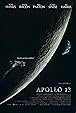 Based off of real events of one of the worst NASA tragedy's. In 1971, NASA plans to send out people to the Moon for a lunar mission. They have chosen astronauts Jim Lovell, Frad Haise, and Jack Swigert. They have launched into outer space successfully, however, a slight fault from inside the space module caused an explosion that turned the exploration into a test for survival for the crew of Apollo 13. While Loveel, Haise, and Swigert try to survive in space. The workers at NASA (including Ken Mattingly) try to figure out a way to get the astronauts home safely Rating - 7,9 / 10 stars Ron Howard Year - 1995 Actor - Kevin Bacon.
Search for Britains space programme on YouTube ‘Button Moon its absolutely magical. youre welcome 👍🏻. Mandella. I watched a mandella effect video on this line when it changed to “weve had a problem “ and now its changed back. First mandella flip flop ive gotten to witness. I thought this was a SMO 2 trailer. Apollo 13 Theatrical release poster Directed by Ron Howard Produced by Brian Grazer Screenplay by William Broyles Jr. Al Reinert Based on Lost Moon by Jim Lovell Jeffrey Kluger Starring Tom Hanks Kevin Bacon Bill Paxton Gary Sinise Ed Harris Kathleen Quinlan Music by James Horner Cinematography Dean Cundey Edited by Daniel P. Hanley Mike Hill Production company Imagine Entertainment Distributed by Universal Pictures Release date June 30, 1995 (United States) Running time 140 minutes Country United States Language English Budget $52 million [1] Box office $355. 2 million [2] Apollo 13 is a 1995 American space docudrama film directed by Ron Howard and starring Tom Hanks, Kevin Bacon, Bill Paxton, Gary Sinise, and Ed Harris. The screenplay by William Broyles Jr. and Al Reinert dramatizes the aborted 1970 Apollo 13 lunar mission and is an adaptation of the book Lost Moon: The Perilous Voyage of Apollo 13 by astronaut Jim Lovell and Jeffrey Kluger. The film depicts astronauts Lovell, Jack Swigert, and Fred Haise aboard Apollo 13 for America's third Moon landing mission. En route, an on-board explosion deprives their spacecraft of most of its oxygen supply and electric power, forcing NASA 's flight controllers to abort the Moon landing, and turning the mission into a struggle to get the three men home safely. Howard went to great lengths to create a technically accurate movie, employing NASA 's technical assistance in astronaut and flight controller training for his cast, and obtaining permission to film scenes aboard a reduced gravity aircraft for realistic depiction of the " weightlessness " experienced by the astronauts in space. Released to cinemas in the United States on June 30, 1995, [3] Apollo 13 was nominated for nine Academy Awards, including Best Picture (winning for Best Film Editing and Best Sound). [4] In total, the film grossed over $355 million worldwide during its theatrical releases. The film was very positively received by critics. Plot [ edit] In July 1969, astronaut Jim Lovell hosts a house party where guests watch Neil Armstrong 's televised first human steps on the Moon. Afterwards Lovell, who had orbited the Moon on Apollo 8, tells his wife Marilyn that he intends to return to the Moon to walk on its surface. Three months later, as Lovell conducts a VIP tour of NASA's Vertical Assembly Building, his boss Deke Slayton informs him that because of problems with Alan Shepard 's crew, his crew will fly Apollo 13 instead of 14. Lovell, Ken Mattingly, and Fred Haise train for their new mission. A few days before launch, Mattingly is exposed to German Measles, and the flight surgeon demands his replacement with Mattingly's backup, Jack Swigert. Lovell resists breaking up his team, but relents when Slayton threatens to bump his crew to a later mission. As the launch date approaches, Marilyn has a nightmare about her husband getting killed in space, but goes to the Kennedy Space Center the night before launch to see him off. On April 11, 1970, Flight Director Gene Kranz gives the go-ahead from Houston's Mission Control Center for the Apollo 13 launch. As the Saturn V rocket climbs through the atmosphere, a second stage engine cuts off prematurely, but the craft reaches its Earth parking orbit. After the third stage fires to send Apollo 13 to the Moon, Swigert performs the maneuver to connect the command module Odyssey to the Lunar Module Aquarius and pull it away from the spent rocket. Three days into the mission, the crew makes a television transmission, which the networks decline to broadcast live. After Swigert turns on the liquid oxygen tank stirring fans as requested, one of the tanks explodes, emptying its contents into space and sending the craft tumbling. The other tank is soon found to be leaking. They attempt to stop the leak by shutting off fuel cells #1 and #3, but to no avail. With the fuel cells closed, the Moon landing must be aborted, and Lovell and Haise must hurriedly power up Aquarius to use as a "lifeboat" for the return home, as Swigert shuts down Odyssey before its battery power runs out. In Houston, Kranz rallies his team to come up with a plan to bring the astronauts home safely, declaring "failure is not an option". Controller John Aaron recruits Mattingly to help him invent a procedure to restart Odyssey for the landing on Earth. As Swigert and Haise watch the Moon pass beneath them, Lovell laments his lost chance of walking on its surface, then turns their attention to the business of getting home. With Aquarius running on minimal electrical power, the crew suffers freezing conditions, and Haise contracts a urinary infection and resulting fever. Swigert suspects Mission Control is withholding their inability to get them home; Haise angrily blames Swigert's inexperience for the accident; and Lovell quickly squelches the argument. When carbon dioxide approaches dangerous levels, ground control must quickly invent a way to make the command module's square filters work in the Lunar Module's round receptacles. With the guidance systems on Aquarius shut down, the crew must make a difficult but vital course correction by manually igniting the Lunar Module's engine. Mattingly and Aaron struggle to find a way to turn on the command module systems without drawing too much power, and finally transmit the procedure to Swigert, who restarts Odyssey by transferring extra power from Aquarius. When the crew jettisons the service module, they are surprised to see the extent of the damage. As they release Aquarius and re-enter the Earth's atmosphere, no one is sure that Odyssey ' s heat shield is intact. The tense period of radio silence due to ionization blackout is longer than normal, but the astronauts report all is well and splash down in the Pacific Ocean. As helicopters bring the three men aboard the recovery ship USS Iwo Jima for a hero's welcome, Lovell's voice-over describes the subsequent investigation into the explosion, and the careers of Haise, Swigert, Mattingly, and Kranz. He wonders if and when mankind will return to the Moon. Cast [ edit] Hanks, Bacon and Paxton portray the astronauts Lovell, Swigert and Haise respectively. Apollo Flight Crew: Tom Hanks as Apollo 13 Commander Jim Lovell: Jim Lovell stated that before his book Lost Moon was even written, the movie rights were being shopped to potential buyers [5] and that his first reaction was that Kevin Costner would be a good choice to play him. [5] However, by the time Howard acquired the director's position, Costner's name never came up in serious discussion, and Hanks had already been interested in doing a film based on Apollo 13. When Hanks' representative informed him that a script was being passed around, he had the script sent to him. [5] John Travolta was initially offered the role of Lovell, but declined. [7] Kevin Bacon as Apollo 13 backup Command Module Pilot Jack Swigert [8] Bill Paxton as Apollo 13 Lunar Module Pilot Fred Haise Mission Control: Gary Sinise as Apollo 13 prime Command Module Pilot Ken Mattingly: Sinise was invited by Howard to read for any of the characters, and chose Mattingly. [5] Ed Harris as White Team Flight Director Gene Kranz: Harris described the film as "cramming for a final exam. " Harris described Gene Kranz as "corny and like a dinosaur", but respected by the crew. [5] Apollo 13 would be Harris' second space travel-themed movie; he had starred as pioneering astronaut John Glenn in 1983's The Right Stuff. Chris Ellis as Director of Flight Crew Operations Deke Slayton Joe Spano as "NASA Director", a composite character loosely based on Chris Kraft Marc McClure as Black Team Flight Director Glynn Lunney Clint Howard as White Team Electrical, Environmental and Consumables Manager (EECOM) Sy Liebergot Ray McKinnon as White Team Flight Dynamics Officer Jerry Bostick Todd Louiso as White Team Flight Activities Officer Loren Dean as EECOM John Aaron Jim Meskimen as White Team Telemetry, Electrical, EVA Mobility Unit Officer (TELMU) David Andrews as Apollo 12 Commander Pete Conrad Christian Clemenson as Flight Surgeon Dr. Charles Berry Ben Marley as Apollo 13 backup Commander John Young Brett Cullen as Capsule Communicator (CAPCOM) 1 Ned Vaughn as CAPCOM 2 Carl Gabriel Yorke as SIM (Simulator) 1 Arthur Senzy as SIM 2 Civilians: Kathleen Quinlan as Marilyn Gerlach Lovell, Jim's wife Xander Berkeley as Henry Hurt, a fictional NASA Office of Public Affairs staff member [9] Tracy Reiner as Haise's wife Mary Mark Wheeler as Neil Armstrong, Apollo 11 Commander Larry Williams as Buzz Aldrin, Apollo 11 Lunar Module Pilot Mary Kate Schellhardt as Lovell's older daughter Barbara Max Elliott Slade as Lovell's older son James (Jay), who attended military school at the time of the flight Emily Ann Lloyd as Lovell's younger daughter Susan Miko Hughes as Lovell's younger son Jeffrey The real Jim Lovell appears as captain of the recovery ship USS Iwo Jima; Howard had intended to make him an admiral, but Lovell himself, having retired as a captain, chose to appear in his actual rank. Horror film director Roger Corman, a mentor of Howard, appears as a congressman being given a VIP tour by Lovell of the Vehicle Assembly Building, as it had become something of a tradition for Corman to make a cameo appearance in his protégés' films. [10] The real Marilyn Lovell appeared among the spectators during the launch sequence. CBS News anchor Walter Cronkite appears in archive news footage and can be heard in newly recorded announcements, some of which he edited himself to sound more authentic. In addition to his brother, Clint Howard, several other members of Ron Howard's family appear in the movie: Rance Howard (his father) appears as the Lovell family minister. Jean Speegle Howard (his mother) appears as Lovell's mother Blanch. Cheryl Howard (his wife) and Bryce Dallas Howard (his daughter) appear as uncredited background performers in the scene where the astronauts wave goodbye to their families. Brad Pitt was offered a role in the film, but turned it down to star in Se7en. [12] Reportedly, the real Pete Conrad expressed interest in appearing in the film. Jeffrey Kluger appears as a television reporter. Production [ edit] Preproduction and props [ edit] The screenplay by William Broyles Jr. and Al Reinert was rewritten by John Sayles after Hanks had been cast and construction of the spacecraft sets had begun. [13] While planning the film, director Ron Howard decided that every shot of the film would be original and that no mission footage would be used. [14] The spacecraft interiors were constructed by the Kansas Cosmosphere and Space Center 's Space Works, which also restored the Apollo 13 command module. Two individual Lunar Modules and two command modules were constructed for filming. While each was a replica, composed of some of the original Apollo materials, they were built so that different sections were removable, which enabled filming to take place inside the capsules. Space Works also built modified Command and Lunar Modules for filming inside a Boeing KC-135 reduced-gravity aircraft, and the pressure suits worn by the actors, which are exact reproductions of those worn by the Apollo astronauts, right down to the detail of being airtight. When suited up with their helmets locked in place, the actors were cooled by air pumped into the suits, and so that they could breathe, exactly as in launch preparations for the real Apollo missions. [15] The real Mission Control Center consisted of two control rooms located on the second and third floors of Building 30 at the Johnson Space Center in Houston, Texas. NASA offered the use of the control room for filming, but Howard declined, opting instead to make his own replica from scratch. [14] Production designer Michael Corenblith and set decorator Merideth Boswell were in charge of the construction of the Mission Control set at Universal Studios. The set was equipped with giant rear-screen projection capabilities and a complex set of computers with individual video feeds to all the flight controller stations. The actors playing the flight controllers were able to communicate with each other on a private audio loop. [15] The Mission Control room built for the film was on the ground floor. [14] One NASA employee, who was a consultant for the film, said that the set was so realistic that he would leave at the end of the day and look for the elevator before remembering he was not in Mission Control. By the time the film was made, the USS Iwo Jima had been scrapped, so her sister ship, the USS New Orleans, was used as the recovery ship instead. [14] For actors, being able to actually shoot in zero gravity as opposed to being in incredibly painful and uncomfortable harnesses for special effects shots was all the difference between what would have been a horrible moviemaking experience as opposed to the completely glorious one that it actually was. —Tom Hanks [15] Howard anticipated difficulty in portraying weightlessness in a realistic manner. He discussed this with Steven Spielberg, who suggested using a KC-135 airplane, which can be flown in such a way as to create about 23 seconds of weightlessness, a method NASA has always used to train its astronauts for space flight. Howard obtained NASA's permission and assistance in filming in the realistic conditions aboard multiple KC-135 flights. [16] Cast training and filming [ edit] In Los Angeles, Ed Harris and all the actors portraying flight controllers enrolled in a Flight Controller School led by Gerry Griffin, an Apollo 13 flight director, and flight controller Jerry Bostick. The actors studied audiotapes from the mission, reviewed hundreds of pages of NASA transcripts, and attended a crash course in physics. [14] [15] Astronaut Dave Scott was impressed with their efforts, stating that each actor was determined to make every scene technically correct, word for word. [5] Scott was the chief technological consultant for the film. [17] Soundtrack [ edit] Apollo 13: Music From The Motion Picture Soundtrack album by James Horner Released June 27, 1995 Genre Soundtrack Length 77: 41 Label MCA Professional ratings Review scores Source Rating AllMusic [18] [19] SoundtrackNet [20] Tracksounds [21] The score to Apollo 13 was composed and conducted by James Horner. The soundtrack was released in 1995 by MCA Records and has seven tracks of score, eight period songs used in the film, and seven tracks of dialogue by the actors at a running time of nearly seventy-eight minutes. The music also features solos by vocalist Annie Lennox and Tim Morrison on the trumpet. The score was a critical success and garnered Horner an Academy Award nomination for Best Original Score. [22] All music is composed by James Horner, except where noted. Apollo 13: Original Motion Picture Soundtrack No. Title Length 1. "Main Title" 1:32 2. "One Small Step" 0:42 3. " Night Train " (performed by James Brown, written by Jimmy Forrest, Lewis Simpkins and Oscar Washington) 3:27 4. " Groovin' " (performed by The Young Rascals) 2:26 5. " Somebody to Love " (performed by Jefferson Airplane) 2:55 6. " I Can See for Miles " (performed by The Who) 4:09 7. " Purple Haze " (performed by The Jimi Hendrix Experience) 2:48 8. "Launch Control" 3:28 9. "All Systems Go/The Launch" 6:39 10. "Welcome to Apollo 13" 0:38 11. " Spirit in the Sky " (performed and written by Norman Greenbaum) 3:50 12. "House Cleaning/Houston, We Have a Problem" 1:34 13. "Master Alarm" 2:54 14. "What's Going On? " 0:34 15. "Into the L. E. M. " 3:43 16. "Out of Time/Shut Her Down" 2:20 17. "The Darkside of the Moon" (performed by Annie Lennox) 5:09 18. "Failure is Not an Option" 1:18 19. " Honky Tonkin' " (performed and written by Hank Williams) 2:42 20. " Blue Moon " (performed by The Mavericks, written by Richard Rodgers and Lorenz Hart) 4:09 21. "Waiting for Disaster/A Privilege" 0:43 22. "Re-Entry & Splashdown" 9:05 23. "End Titles" (performed by Annie Lennox) 5:34 Release [ edit] The film was released on June 30, 1995 in North America and on September 22, 1995 in the UK. In September 2002 the film was re-released in IMAX. It was the first film to be digitally remastered using IMAX DMR technology. [23] Box-office performance [ edit] The film was a box-office success, bringing in $355, 237, 933 worldwide. [2] The film's widest release was 2, 347 theaters. [2] The film's opening weekend and the following two weeks placed it at #1 with a US gross of $25, 353, 380, which made up 14. 7% of the total US gross. [2] Apollo 13 box office revenue Source Gross ( US$)% Total All-time rank (unadjusted) North America $173, 837, 933 [2] 48. 9% 229 [2] Foreign $181, 400, 000 [2] 51. 1% N/A Worldwide $355, 237, 933 [2] 100. 0% 282 [2] Reception [ edit] Review aggregator Rotten Tomatoes reports that the film has an overall approval rating of 95%, based on 88 reviews, with a weighted average rating of 8. 2/10. The site's critical consensus reads, "In recreating the troubled space mission, Apollo 13 pulls no punches: it's a masterfully told drama from director Ron Howard, bolstered by an ensemble of solid performances. " [24] Metacritic, which assigns a normalized rating to reviews from mainstream critics, gave the film an average score of 77 out of 100, based on 22 critics, indicating "generally favorable reviews". [25] Roger Ebert of the Chicago Sun-Times praised the film in his review saying: "A powerful story, one of the year's best films, told with great clarity and remarkable technical detail, and acted without pumped-up histrionics. " [26] Richard Corliss of Time highly praised the film, saying: "From lift-off to splashdown, Apollo 13 gives one hell of a ride. " [27] Edward Guthmann of San Francisco Chronicle gave a mixed review and wrote: "I just wish that Apollo 13 worked better as a movie, and that Howard's threshold for corn, mush and twinkly sentiment weren't so darn wide. " [28] Peter Travers of Rolling Stone praised the film and wrote: "Howard lays off the manipulation to tell the true story of the near-fatal 1970 Apollo 13 mission in painstaking and lively detail. It's easily Howard's best film. " [29] Janet Maslin made the film an NYT Critics' Pick, calling it an "absolutely thrilling" film that "unfolds with perfect immediacy, drawing viewers into the nail-biting suspense of a spellbinding true story. " According to Maslin, "like Quiz Show, Apollo 13 beautifully evokes recent history in ways that resonate strongly today. Cleverly nostalgic in its visual style ( Rita Ryack 's costumes are especially right), it harks back to movie making without phony heroics and to the strong spirit of community that enveloped the astronauts and their families. Amazingly, this film manages to seem refreshingly honest while still conforming to the three-act dramatic format of a standard Hollywood hit. It is far and away the best thing Mr. Howard has done (and Far and Away was one of the other kind). " [30] The academic critic Raymond Malewitz focuses on the DIY aspects of the "mailbox" filtration system to illustrate the emergence of an unlikely hero in late 20th-century American culture—"the creative, improvisational, but restrained thinker—who replaces the older prodigal cowboy heroes of American mythology and provides the country a better, more frugal example of an appropriate 'husband'. " [31] Marilyn Lovell praised Quinlan's portrayal of her, stating she felt she could feel what Quinlan's character was going through, and remembered how she felt in her mind. [5] Home media [ edit] A 10th-anniversary DVD of the film was released in 2005; it included both the theatrical version and the IMAX version, along with several extras. [32] The IMAX version has a 1. 66:1 aspect ratio. [33] In 2006, Apollo 13 was released on HD DVD and on April 13, 2010 it was released on Blu-ray disc as the 15th-anniversary edition on the 40th anniversary of the Apollo 13 accident. [32] The Film was released on 4K UHD Blu-Ray on October 17, 2017. [34] Accolades [ edit] Year Award Category Recipient Result Ref. 1996 Academy Awards (1996) Best Film Editing Mike Hill and Daniel Hanley Won [4] Best Sound Rick Dior, Steve Pederson, Scott Millan, and David MacMillan Best Actor in a Supporting Role Ed Harris (lost to Kevin Spacey in The Usual Suspects) Nominated Best Actress in a Supporting Role Kathleen Quinlan (lost to Mira Sorvino in Mighty Aphrodite) Best Art Direction Art Direction: Michael Corenblith; Set Decoration: Merideth Boswell (lost to Restoration) Best Original Dramatic Score James Horner (lost to Il Postino) Best Picture Brian Grazer (lost to Braveheart) Best Visual Effects Robert Legato, Michael Kanfer, Leslie Ekker, and Matt Sweeney (lost to Babe) Best Adapted Screenplay William Broyles Jr. and Al Reinert (lost to Sense and Sensibility) American Cinema Editors (Eddies) Best Edited Feature Film Mike Hill, Daniel P. Hanley American Society of Cinematographers Outstanding Achievement in Cinematography in Theatrical Releases Dean Cundey BAFTA Film Awards Best Production Design Michael Corenblith Outstanding Achievement in Special Visual Effects Robert Legato, Michael Kanfer, Matt Sweeney, Leslie Ekker Best Cinematography Best Editing Mike Hill, Daniel Hanley David MacMillan, Rick Dior, Scott Millan, Steve Pederson Casting Society of America (Artios) Best Casting for Feature Film, Drama Jane Jenkins, Janet Hirshenson Chicago Film Critics Association Awards Apollo 13 Directors Guild of America Outstanding Directorial Achievement in Motion Pictures Ron Howard, Carl Clifford, Aldric La'Auli Porter, Jane Paul Golden Globe Awards Best Supporting Actor – Motion Picture Ed Harris as Gene Kranz Best Supporting Actress – Motion Picture Kathleen Quinlan as Marilyn Lovell Best Director – Motion Picture Ron Howard Best Motion Picture – Drama Heartland Film Festival Studio Crystal Heart Award Jeffrey Kluger Hugo Awards Best Dramatic Presentation MTV Movie Awards Best Male Performance Tom Hanks as Jim Lovell Best Movie PGA Awards Motion Picture Producer of the Year Award Brian Grazer, Todd Hallowell Saturn Awards Best Action / Adventure / Thriller Film Apollo 13 (lost to The Usual Suspects) Screen Actors Guild Awards Outstanding Performance by a Male Actor in a Supporting Role Outstanding Performance by a Cast Kevin Bacon, Tom Hanks, Ed Harris, Bill Paxton, Kathleen Quinlan, and Gary Sinise Space Foundation's Douglas S. Morrow Public Outreach Award Best Family Feature – Drama [35] Writers Guild of America Awards Best Screenplay Adapted from Another Medium William Broyles Jr., Al Reinert Young Artist Awards 2005 American Film Institute AFI's 100 Years... 100 Movie Quotes "Houston, we have a problem. " (#50) [36] 2006 AFI's 100 Years... 100 Cheers Apollo 13 (#12) Technical and historical accuracy [ edit] Apollo 13 space capsule prop from the film The film depicts the crew hearing a bang quickly after Swigert followed directions from mission control to stir the oxygen and hydrogen tanks. In reality, the crew heard the bang 93 seconds later. [37] The film portrays the Saturn V launch vehicle being rolled out to the launch pad two days before launch. In reality, the launch vehicle was rolled out on the Mobile Launcher using the crawler-transporter weeks before the launch date. [ citation needed] The movie depicts Swigert and Haise arguing about who was at fault. The show The Real Story: Apollo 13 broadcast on the Smithsonian Channel includes Haise stating that no such argument took place and that there was no way anyone could have foreseen that stirring the tank would cause problems. [38] The dialogue between ground control and the astronauts was taken nearly verbatim from transcripts and recordings, with the exception of one of the taglines of the film, " Houston, we have a problem. " (This quote was voted #50 on the list " AFI's 100 Years... 100 Movie Quotes ". ) According to the mission transcript, the actual words uttered by Jack Swigert were "Hey, we've got a problem here" (talking over Haise, who had started "Okay, Houston"). Ground control responded by saying "This is Houston, say again please. " Jim Lovell then repeated, "Houston, we've had a problem. " [39] One other incorrect dialogue is after the re-entry blackout. In the movie, Tom Hanks (as Lovell) says "Hello Houston... this is Odyssey... it's good to see you again. " In the actual re-entry, the Command Module's transmission was finally acquired by a Sikorsky SH-3D Sea King recovery helicopter which then relayed communications to Mission Control. CAPCOM and fellow astronaut Joe Kerwin (not Mattingly, who serves as CAPCOM in this scene in the movie) then made a call to the spacecraft "Odyssey, Houston standing by. Over. " Jack Swigert, not Lovell, replied "Okay, Joe, " and unlike in the movie, this was well before the parachutes deployed; the celebrations depicted at Mission Control were triggered by visual confirmation of their deployment. [40] The tagline "Failure is not an option", stated in the film by Gene Kranz, also became very popular, but was not taken from the historical transcripts. The following story relates the origin of the phrase, from an e-mail by Apollo 13 Flight Dynamics Officer Jerry Bostick: As far as the expression "Failure is not an option, " you are correct that Kranz never used that term. In preparation for the movie, the script writers, Al Reinart and Bill Broyles, came down to Clear Lake to interview me on "What are the people in Mission Control really like? " One of their questions was "Weren't there times when everybody, or at least a few people, just panicked? " My answer was "No, when bad things happened, we just calmly laid out all the options, and failure was not one of them. We never panicked, and we never gave up on finding a solution. " I immediately sensed that Bill Broyles wanted to leave and assumed that he was bored with the interview. Only months later did I learn that when they got in their car to leave, he started screaming, "That's it! That's the tag line for the whole movie, Failure is not an option. Now we just have to figure out who to have say it. " Of course, they gave it to the Kranz character, and the rest is history. [41] In the film, Flight Director Gene Kranz and his White Team are portrayed as managing all of the essential parts of the flight, from liftoff to landing. Consequently, the actual role of the other flight directors and teams, especially Glynn Lunney and his Black Team, were neglected. In fact, it was Flight Director Lunney and his Black Team who got Apollo 13 through its most critical period in the hours immediately after the explosion, including the mid-course correction that sent Apollo 13 on a "free return" trajectory around the Moon and back to the Earth. Astronaut Ken Mattingly, who was replaced as Apollo 13 Command Module Pilot at the last minute by Jack Swigert, later said: If there was a hero, Glynn Lunney was, by himself, a hero, because when he walked in the room, I guarantee you, nobody knew what the hell was going on. Glynn walked in, took over this mess, and he just brought calm to the situation. I've never seen such an extraordinary example of leadership in my entire career. Absolutely magnificent. No general or admiral in wartime could ever be more magnificent than Glynn was that night. He and he alone brought all of the scared people together. And you've got to remember that the flight controllers in those days were—they were kids in their thirties. They were good, but very few of them had ever run into these kinds of choices in life, and they weren't used to that. All of a sudden, their confidence had been shaken. They were faced with things that they didn't understand, and Glynn walked in there, and he just kind of took charge. [42] A DVD commentary track, recorded by Jim and Marilyn Lovell and included with both DVD versions, [32] mentions several inaccuracies included in the film, all done for reasons of artistic license: We were working and watching the controls during that time. Because we came in shallow, it took us longer coming through the atmosphere where we had ionization. And the other thing was that we were just slow in answering. —Jim Lovell, on the real reason for the delay in replying after Apollo 13's four-minute re-entry into Earth's atmosphere [43] In the film, Mattingly plays a key role in solving a power consumption problem that Apollo 13 was faced with as it approached re-entry. Lovell points out in his commentary that Mattingly was a composite of several astronauts and engineers—including Charles Duke (whose rubella led to Mattingly's grounding)—all of whom played a role in solving that problem. When Jack Swigert is getting ready to dock with the LM, a concerned NASA technician says: "If Swigert can't dock this thing, we don't have a mission. " Lovell and Haise also seem worried. In his DVD commentary, the real Jim Lovell says that if Swigert had been unable to dock with the LM, he or Haise could have done it. He also says that Swigert was a well-trained Command Module Pilot and that no one was really worried about whether he was up to the job, [43] but he admitted that it made a nice subplot for the film. What the astronauts were really worried about, Lovell says, was the expected rendezvous between the Lunar Module and the Command Module after Lovell and Haise left the surface of the Moon. A scene set the night before the launch, showing the astronauts' family members saying their goodbyes while separated by a road, to reduce the possibility of any last-minute transmission of disease, depicted a tradition that did not begin until the Space Shuttle program. The film depicts Marilyn Lovell dropping her wedding ring down a shower drain. According to Jim Lovell, this did occur, [43] but the drain trap caught the ring and his wife was able to retrieve it. Lovell has also confirmed that the scene in which his wife had a nightmare about him being "sucked through an open door of a spacecraft into outer space" also occurred, though he believes the nightmare was prompted by her seeing a scene in Marooned, a 1969 film they saw three months before Apollo 13 launched. [43] See also [ edit] From the Earth to the Moon, a 1998 docudrama mini-series based around the Apollo missions Gravity, a 2013 film about astronauts stranded in Earth orbit Marooned, a 1969 film directed by John Sturges, about astronauts marooned in an Apollo command and service module Other survival films References [ edit] This article incorporates public domain material from websites or documents of the National Aeronautics and Space Administration. ^ "CNN Showbiz News: Apollo 13". CNN. Retrieved April 9, 2009. ^ a b c d e f g h i "Apollo 13 (1995)". Box Office Mojo. Retrieved April 9, 2009. ^ "Apollo 13". June 30, 1995. Retrieved September 11, 2016. ^ a b "Academy Awards, USA: 1996". Archived from the original on July 23, 2008. Retrieved April 8, 2009. ^ a b c d e f g "Lost Moon: The Triumph of Apollo 13". Retrieved January 1, 2012. ^ "Film Casting that Might Have Been for John Travolta and Richard Gere". Archived from the original on July 28, 2014. Retrieved January 1, 2012. ^ Ebert, Robert (June 30, 1995). "America's Derring-Do Resurrected". The Record. Hackensack, New Jersey. p. 43 – via ^ The character in the film is a composite of protocol officer Bob McMurrey, who relayed the request for permission to erect a TV tower to Marilyn Lovell, and an unnamed OPA staffer who made the request on the phone, to whom she personally denied it as Quinlan did to "Henry" in the film. "Henry" is also seen performing other OPA functions, such as conducting a press conference. Kluger, Jeffrey; Jim Lovell (July 1995). Lost Moon: The Perilous Voyage of Apollo 13 (First Pocket Books printing ed. ). New York: Pocket Books. pp. 118, 209–210, 387. ISBN 0-671-53464-5. ^ "Repertoire Of Horrors: The Films Of Roger Corman". Retrieved January 1, 2012. ^ "Brad Pitt – A Quick Overview". Retrieved January 1, 2012. ^ Johnson, Mary; Neff, Renfreu; Mercurio, Jim; Goldsmith, David F. (April 15, 2016). "John Sayles on Screenwriting". Creative Screenwriting. Retrieved October 2, 2017. ^ a b c d e Apollo 13: 2-Disc Anniversary Edition (Disc 1), Production Notes (DVD). Universal Studios. March 19, 2005. ^ a b c d "Production Notes (Press Release)" (PDF). IMAX. Archived from the original (PDF) on June 4, 2011. Retrieved April 9, 2009. ^ "Ron Howard Weightless Again Over Apollo 13's DGA Win". Archived from the original on October 7, 2011. Retrieved December 16, 2011. ^ Nichols, Peter M. (September 6, 1998). "Television; From Earth to the Moon and Back, for More Bows". The New York Times. ^ Apollo 13 at AllMusic ^ "Filmtracks: Apollo 13 (James Horner)".. ^ review Archived June 5, 2008, at the Wayback Machine ^ Tracksounds review Archived April 1, 2009, at the Wayback Machine ^ Apollo 13 soundtrack review at Filmtracks. Retrieved 24 February 2011. ^ "History of IMAX". Retrieved February 11, 2011. ^ "Apollo 13". Rotten Tomatoes. Archived from the original on August 20, 2010. Retrieved August 24, 2010. ^ "Apollo 13 Reviews". Metacritic. Retrieved September 25, 2011. ^ "Apollo 13: Roger Ebert". Chicago Sun-Times. Retrieved April 11, 2009. ^ "Apollo 13: Review". Time. July 3, 1995. Retrieved April 11, 2009. ^ Guthmann, Edward (June 30, 1995). "Apollo 13 Review: Story heroic, but it just doesn't fly". San Francisco Chronicle. Retrieved April 11, 2009. ^ "Apollo 13 Review: Rolling Stone". Rolling Stone. Retrieved April 11, 2009. ^ Maslin, Janet (June 30, 1995). " Apollo 13, a Movie for the Fourth of July". The New York Times. Retrieved September 30, 2011. ^ Malewitz, Raymond (September 5, 2014). "getting Rugged With Thing Theory". Stanford UP. Retrieved September 30, 2014. ^ a b c "Apollo 13 Blu-Ray Release". Retrieved September 29, 2011. ^ "Apollo 13 (DVD - 2005)". Lethbridge Public Library. Retrieved December 30, 2011. ^ "Apollo 13 - 4K Ultra HD Blu-ray Ultra HD Review | High Def Digest".. Retrieved December 22, 2017. ^ "Symposium Awards". National Space Symposium. Archived from the original on February 3, 2009. Retrieved April 26, 2009. ^ a b "AFI's 100 years... 100 quotes" (PDF). AFI. Archived (PDF) from the original on March 26, 2009. Retrieved April 13, 2009. ^ Apollo 13 Timeline, Apollo by the Numbers: A Statistical Reference, NASA History Series, Office of Policy and Plans, Richard W. Orloff, Sept. 2004. See "Oxygen tank #2 fans on. Stabilization control system electrical disturbance indicated a power transient. 055:53:20. " ^ The Real Story: Apollo 13, Season 4, Episode 3, 2012. See this section beginning at 15:18. ^ "Page 231 of Apollo 13's transcript at NASA Johnson Space Center" (PDF). Retrieved August 8, 2015. ^ "Apollo 13's re-entry transcript on Spacelog". ^ "Origin of Apollo 13 Quote: "Failure Is Not an Option. " ".. Retrieved April 4, 2010. ^ Ken Mattingly, quoted in Go, Flight! The Unsung Heroes of Mission Control, 1965-1992, Rick Houston and Milt Heflin, 2015, University of Nebraska Press, p. 221 ^ a b c d William, Lena (July 19, 1995). "In Space, No Room For Fear". Retrieved September 30, 2011. External links [ edit] Apollo 13 on IMDb Apollo 13 at the TCM Movie Database Apollo 13 at AllMovie Apollo 13 at Rotten Tomatoes Apollo 13 at Box Office Mojo.
After Apollo 13 landed, Grumman, the company that built the LEM, sent North American Aviation, the company that built the service module, a towing bill for bring it to the moon and back. True story. I don't know if they were serious, but you can see it at the Cradle of Aviation Museum in Long Island. Apollo 13 crew members. Still lightyears ahead of First Man. I believe this movie is Ron Howard's Magnum Opus.
Apollon 13 février. This movie does a good job of making you feel the danger and terror that these three astronauts went through. This movie made me look at space exploring and NASA differently. Not only were the astronauts stressed out but the people on Earth were sleep deprived and working non stop to get these guys home. Apollo 13 trailer. 1:20 this is what you came for. What I like about this movie is how it depicts the intense professionalism of the NASA flight engineers. Compared the much-ballyhooed The Martian, where the main NASA character is depicted as a fratboy geek. My favorite political movie. Apollo 13 astronauts. Apollo 13 Apollo 13's damaged service module, seen from the command module, as it was being jettisoned shortly before reentry Mission type Crewed lunar landing attempt ( H) Operator NASA COSPAR ID 1970-029A SATCAT no. 4371 [1] Mission duration 5 days, 22 hours, 54 minutes, 41 seconds [2] Spacecraft properties Spacecraft Apollo CSM -109 Apollo LM -7 Manufacturer CSM: North American Rockwell LM: Grumman Launch mass 45, 931 kilograms (101, 261 lb) [3] Landing mass 5, 050 kilograms (11, 133 lb) [4] Crew Crew size 3 Members James A. Lovell, Jr. John L. Swigert, Jr. Fred W. Haise, Jr. Callsign CM: Odyssey LM: Aquarius Start of mission Launch date April 11, 1970, 19:13:00 UTC Rocket Saturn V SA-508 Launch site Kennedy LC-39A End of mission Recovered by USS Iwo Jima Landing date April 17, 1970, 18:07:41 UTC Landing site South Pacific Ocean 21°38′24″S 165°21′42″W / 21. 64000°S 165. 36167°W Docking with LM Docking date April 11, 1970, 22:32:08 UTC Undocking date April 17, 1970, 16:43:00 UTC Lovell, Swigert, Haise Apollo program ← Apollo 12 Apollo 14 → Apollo 13 was the seventh crewed mission in the Apollo space program and the third meant to land on the Moon. The craft was launched from Kennedy Space Center on April 11, 1970, but the lunar landing was aborted after an oxygen tank in the service module (SM) failed two days into the mission. The crew instead looped around the Moon, and returned safely to Earth on April 17. The mission was commanded by Jim Lovell with Jack Swigert as command module (CM) pilot and Fred Haise as lunar module (LM) pilot. Swigert was a late replacement for Ken Mattingly, who was grounded after exposure to rubella. Accidental ignition of damaged wire insulation inside the oxygen tank as it was being routinely stirred caused an explosion that vented the tank's contents. Without oxygen, needed both for breathing and for generating electric power, the SM's propulsion and life support systems could not operate. The CM's systems had to be shut down to conserve its remaining resources for reentry, forcing the crew to transfer to the LM as a lifeboat. With the lunar landing canceled, mission controllers worked to bring the crew home alive. Although the LM was designed to support two men on the lunar surface for two days, Mission Control in Houston improvised new procedures so it could support three men for four days. The crew experienced great hardship caused by limited power, a chilly and wet cabin and a shortage of potable water. There was a critical need to adapt the CM's cartridges for the carbon dioxide removal system to work in the LM; the crew and mission controllers were successful in improvising a solution. The astronauts' peril briefly renewed interest in the Apollo program; tens of millions watched the splashdown in the South Pacific Ocean by television. An investigative review board found fault with preflight testing of the oxygen tank and the fact that Teflon was placed inside it. The board recommended changes, including minimizing the use of potentially combustible items inside the tank; this was done for Apollo 14. The story of Apollo 13 has been dramatized several times, most notably in the 1995 film Apollo 13. Background In 1961, U. S. President John F. Kennedy challenged his nation to land an astronaut on the Moon by the end of the decade, with a safe return to Earth. [5] NASA worked towards this goal incrementally, sending astronauts into space during Project Mercury and Project Gemini, leading up to the Apollo program. [6] The goal was achieved with Apollo 11, which landed on the Moon on July 20, 1969. Neil Armstrong and Buzz Aldrin walked on the lunar surface while Michael Collins orbited the Moon in Command Module Columbia. The mission returned to Earth on July 24, 1969, fulfilling Kennedy's challenge. [5] NASA had contracted for fifteen Saturn V rockets to achieve the goal; at the time no one knew how many missions this would require. [7] Since success was obtained in 1969 with the sixth Saturn V on Apollo 11, nine rockets remained available for a hoped-for total of ten landings. After the excitement of Apollo 11, the general public grew apathetic towards the space program and Congress continued to cut NASA's budget; Apollo 20 was canceled. [8] Despite the successful lunar landing, the missions were considered so risky that astronauts could not afford life insurance to provide for their families if they died in space. [note 1] [9] Mission Operations Control Room during the TV broadcast just before the Apollo 13 accident. Astronaut Fred Haise is shown on the screen. Even before the first U. astronaut entered space in 1961, planning for a centralized facility to communicate with the spacecraft and monitor its performance had begun, for the most part the brainchild of Christopher C. Kraft, who became NASA's first flight director. During John Glenn 's Mercury Friendship 7 flight in February 1962 (the first crewed orbital flight by the U. ), Kraft was overruled by NASA managers. He was vindicated by post-mission analysis, and implemented a rule that during the mission, the flight director's word was absolute [10] —to overrule him, NASA would have to fire him on the spot. [11] Flight directors during Apollo had a one-sentence job description, "The flight director may take any actions necessary for crew safety and mission success. " [12] In 1965, Houston's Mission Control Center opened, in part designed by Kraft and now named for him. [10] In Mission Control, each flight controller, as well as monitoring telemetry from the spacecraft, was in communication via voice loop to specialists in a Staff Support Room (or "back room"), who focused on specific spacecraft systems. [11] Apollo 13 was to be the second H mission, meant to demonstrate precision lunar landings and explore specific sites on the Moon. [13] With Kennedy's goal accomplished by Apollo 11, and Apollo 12 demonstrating that the astronauts could perform a precision landing, mission planners were able to focus on more than just landing safely and having astronauts minimally trained in geology gather lunar samples to take home to Earth. There was a greater role for science on Apollo 13, especially for geology, something emphasized by the mission's motto, Ex luna, scientia (From the Moon, knowledge). [14] Astronauts and key Mission Control personnel Swigert, Lovell and Haise the day before launch Apollo 13's mission commander, Jim Lovell, was 42 years old at the time of the spaceflight, which was his fourth and last. He was a graduate of the United States Naval Academy and had been a naval aviator and test pilot before being selected for the second group of astronauts in 1962; he flew with Frank Borman in Gemini 7 in 1965 and Aldrin in Gemini 12 the following year before flying in Apollo 8 in 1968, the first spacecraft to orbit the Moon. [15] Jack Swigert, the command module pilot (CMP), was 38 years old and held a B. in mechanical engineering and an M. in aerospace science; he had served in the Air Force and in state Air National Guards, and was an engineering test pilot before being selected for the fifth group of astronauts in 1966. [16] Fred Haise, the lunar module pilot (LMP), was 35 years old. He held a B. in aeronautical engineering, had been a Marine Corps fighter pilot, and was a civilian research pilot for NASA when he was selected as a Group 5 astronaut. [17] Apollo 13 was Swigert's and Haise's only spaceflight. [18] According to the standard Apollo crew rotation, the prime crew for Apollo 13 would have been the backup crew [note 2] for Apollo 10 with Mercury and Gemini veteran Gordon Cooper in command, Donn F. Eisele as CMP and Edgar Mitchell as LMP. Deke Slayton, NASA's Director of Flight Crew Operations, never intended to rotate Cooper and Eisele to a prime crew assignment, as both were out of favor – Cooper for his lax attitude towards training, and Eisele for incidents aboard Apollo 7 and an extramarital affair. He assigned them to the backup crew because no other veteran astronauts were available. [21] Slayton's original choices for Apollo 13 were Alan Shepard as commander, Stuart Roosa as CMP, and Mitchell as LMP. However, management felt Shepard needed more training time, as he had only recently resumed active status after surgery for an inner ear disorder, and had not flown since 1961. Thus Lovell's crew (himself, Haise and Ken Mattingly) having all backed up Apollo 11 and slated for Apollo 14, was swapped with Shepard's. [21] Swigert was originally CMP of Apollo 13's backup crew, with John Young as commander and Charles Duke as lunar module pilot. [22] Seven days before launch, Duke contracted rubella from a friend of his son. [23] This exposed both the prime and backup crews, who trained together. Of the five, only Mattingly was not immune through prior exposure. Normally, if any member of the prime crew had to be grounded, the remaining crew would be replaced as well, and the backup crew substituted, but Duke's illness ruled this out, [24] so two days before launch, Mattingly was replaced by Swigert. [16] Mattingly never developed rubella and later flew on Apollo 16. [25] For Apollo, a third crew of astronauts, known as the support crew, was designated in addition to the prime and backup crews used on projects Mercury and Gemini. Slayton created the support crews because James McDivitt, who would command Apollo 9, believed that, with preparation going on in facilities across the US, meetings that needed a member of the flight crew would be missed. Support crew members were to assist as directed by the mission commander. [26] Usually low in seniority, they assembled the mission's rules, flight plan, and checklists, and kept them updated; [27] [28] for Apollo 13, they were Vance D. Brand, Jack Lousma and either William R. Pogue or Joseph Kerwin. [note 3] [33] For Apollo 13, flight directors were: Gene Kranz, White team, [34] (the lead flight director); [35] [36] Glynn Lunney, Black team; Milt Windler, Maroon team and Gerry Griffin, Gold team. [34] The CAPCOMs (the person in Mission Control, during the Apollo program an astronaut, who was responsible for voice communications with the crew) [37] for Apollo 13 were Kerwin, Brand, Lousma, Young and Mattingly. [38] Mission insignia and call signs The Apollo 13 mission insignia depicts the Greek god of the Sun, Apollo, with three horses pulling his chariot across the face of the Moon, and the Earth seen in the distance. This is meant to symbolize the Apollo flights bringing the light of knowledge to all people. The mission motto, Ex luna, scientia (From the Moon, knowledge), appears. In choosing it, Lovell adapted the motto of his alma mater, the Naval Academy, Ex scientia, trident (From knowledge, sea power). [39] [40] On the patch, the mission number appeared in Roman numerals as Apollo XIII. It did not have to be modified after Mattingly's replacement by Swigert since it is one of only two Apollo mission insignia—the other being Apollo 11—not to include the names of the crew. It was designed by artist Lumen Martin Winter, who based it on a mural he had painted for The St. Regis Hotel in New York City. [41] The mural was later purchased by actor Tom Hanks, [42] who portrayed Lovell in the movie Apollo 13, and is now in the Captain James A. Lovell Federal Health Care Center in Illinois. [43] The mission's motto was in Lovell's mind when he chose the call sign Aquarius for the lunar module, taken from Aquarius, the bringer of water. [44] [45] Some in the media erroneously reported that the call sign was taken from a song by that name from the musical Hair. [45] [46] The command module's call sign, Odyssey, was chosen not only for its Homeric association but to refer to the recent movie, 2001: A Space Odyssey, based on a short story by science fiction author Arthur C. Clarke. [44] In his book, Lovell indicated he chose the name Odyssey because he liked the word and its definition: a long voyage with many changes of fortune. [45] Launch vehicle and spacecraft CSM-109 Odyssey being assembled and tested The Saturn V rocket used to carry Apollo 13 to the Moon was numbered SA-508, and was almost identical to those used on Apollo 8 through 12. [47] Including the spacecraft, the rocket weighed in at 2, 949, 136 kilograms (6, 501, 733 lb). [3] The S-IC stage's engines were rated to generate 440, 000 newtons (100, 000 lbf) less total thrust than Apollo 12's, though they remained within specifications. Extra propellant was carried as a test since future J missions to the Moon would require more propellant for their heavier payloads. This made the vehicle the heaviest yet flown by NASA and Apollo 13 was visibly slower to clear the launch tower than earlier missions. [48] The Apollo 13 spacecraft consisted of Command Module 109 and Service Module 109 (together CSM-109), called Odyssey, and Lunar Module 7 (LM-7), called Aquarius. Also considered part of the spacecraft were the launch escape system which would propel the command module (CM) to safety in the event of a problem during liftoff, and the Spacecraft–LM Adapter, numbered as SLA-16, which housed the lunar module (LM) during the first hours of the mission. [49] [50] The LM stages, CM and service module (SM) were received at Kennedy Space Center (KSC) in June 1969; the portions of the Saturn V were received in June and July. Thereafter, testing and assembly proceeded, culminating with the rollout of the launch vehicle, with the spacecraft atop it, on December 15, 1969. [49] Apollo 13 was originally scheduled for launch on March 12, 1970; in January of that year NASA announced the mission would be postponed until April 11, both to allow more time for planning and to spread the Apollo missions over a longer period of time. [51] The plan was to have two Apollo flights per year, and was in response to budgetary constraints [52] that had recently seen the cancellation of Apollo 20. [53] Training and preparation Lovell practices deploying the flag The Apollo 13 prime crew undertook over 1, 000 hours of mission-specific training, more than five hours for every hour of the mission's ten-day planned duration. Each member of the prime crew spent over 400 hours in simulators of the CM and (for Lovell and Haise) of the LM at KSC and at Houston, some of which involved the flight controllers at Mission Control. [54] Flight controllers participated in many simulations of problems with the spacecraft in flight, which taught them how to react in an emergency. [11] Specialized simulators at other locations were also used by the crew members. [54] The astronauts of Apollo 11 had minimal time for geology training, with only six months between crew assignment and launch; higher priorities took much of their time. [55] Apollo 12 saw more such training, including practice in the field, using a CAPCOM and a simulated backroom of scientists, to whom the astronauts had to describe what they saw. [56] Scientist-astronaut Harrison Schmitt saw that there was limited enthusiasm for geology field trips. Believing an inspirational teacher was needed, Schmitt arranged for Lovell and Haise to meet his old professor, Caltech 's Lee Silver. The two astronauts, and backups Young and Duke, went on a field trip with Silver at their own time and expense. At the end of their week together, Lovell made Silver their geology mentor, who would be extensively involved in the geology planning for Apollo 13. [57] Farouk El-Baz oversaw the training of Mattingly and his backup, Swigert, which involved describing and photographing simulated lunar landmarks from airplanes. [58] El-Baz had all three prime crew astronauts describe geologic features they saw during their flights between Houston and KSC; Mattingly's enthusiasm caused other astronauts, such as Apollo 14's CMP, Roosa, to seek out El-Baz as a teacher. [59] Concerned about how close Apollo 11's LM, Eagle, had come to running out of propellant during its lunar descent, mission planners decided that beginning with Apollo 13, the CSM would bring the LM to the low orbit from which the landing attempt would commence. This was a change from Apollo 11 and 12, on which the LM made the burn to bring it to the lower orbit. The change was part of an effort to increase the amount of hover time available to the astronauts as the missions headed into rougher terrain. [60] The plan was to devote the first of the two four-hour lunar surface extravehicular activities (EVAs) to setting up the Apollo Lunar Surface Experiments Package (ALSEP) group of scientific instruments; during the second, Lovell and Haise would investigate Cone crater, near the planned landing site. [61] The two astronauts wore their spacesuits for some 20 walk-throughs of EVA procedures, including sample gathering and use of tools and other equipment. They flew in the " Vomit Comet " in simulated microgravity or lunar gravity, including practice in donning and doffing spacesuits. To prepare for the descent to the Moon's surface, Lovell flew the Lunar Landing Training Vehicle (LLTV). [62] Despite the fact that four of the five LLTVs and similar Lunar Landing Research Vehicles crashed during the course of the Apollo program, mission commanders considered flying them invaluable experience. [63] Experiments and scientific objectives Lovell (left) and Haise during geology training in Hawaii, January 1970 Apollo 13's designated landing site was near Fra Mauro crater; the Fra Mauro formation was believed to contain much material spattered by the impact that had filled the Imbrium basin early in the Moon's history. Dating it would provide information not only about the Moon, but about the Earth's early history. Such material was likely to be available at Cone crater, a site where an impact was believed to have drilled deep into the lunar regolith. [64] Apollo 11 had left a seismometer on the Moon, but the solar-powered unit did not survive its first two-week-long lunar night. The Apollo 12 astronauts also left one as part of its ALSEP, which was nuclear-powered. [65] Apollo 13 also carried a seismometer (known as the Passive Seismic Experiment, or PSE), similar to Apollo 12's, as part of its ALSEP, to be left on the Moon by the astronauts. [66] That seismometer was to be calibrated by the impact, after jettison, of the ascent stage of Apollo 13's LM, an object of known mass and velocity impacting at a known location. [67] Other ALSEP experiments on Apollo 13 included a Heat Flow Experiment (HFE), which would involve drilling two holes 3. 0 metres (10 ft) deep. [68] This was Haise's responsibility; he was also to drill a third hole of that depth for a core sample. [69] A Charged Particle Lunar Environment Experiment (CPLEE) measured the protons and electrons of solar origin reaching the Moon. [70] The package also included a Lunar Atmosphere Detector (LAD) [71] and a Dust Detector, to measure the accumulation of debris. [72] The Heat Flow Experiment and the CPLEE were flown for the first time on Apollo 13; the other experiments had been flown before. [69] Haise practices removing the fuel capsule from its transport cask mounted on the LM. The real cask sank unopened into the Pacific Ocean with its radioactive contents. To power the ALSEP, the SNAP-27 radioisotope thermoelectric generator (RTG) was flown. Developed by the U. Atomic Energy Commission, SNAP-27 was first flown on Apollo 12. The fuel capsule contained about 3. 79 kilograms (8. 36 lb) of plutonium oxide. The cask placed around the capsule for transport to the Moon was built with heat shields of graphite and of beryllium, and with structural parts of titanium and of Inconel materials. Thus, it was built to withstand the heat of reentry into the Earth's atmosphere rather than pollute the air with plutonium in the event of an aborted mission. [73] A United States flag was also taken, to be erected on the Moon's surface. [74] For Apollo 11 and 12, the flag had been placed in a heat-resistant tube on the front landing leg; it was moved for Apollo 13 to the Modularized Equipment Stowage Assembly (MESA) in the LM descent stage. The structure to fly the flag on the airless Moon was improved from Apollo 12's. [75] Since Lovell and Haise were to undertake longer traverses than on the earlier missions, the tool carrier which the Apollo 12 astronauts had hand-carried was expanded, given two wheels, and dubbed the Modular Equipment Transporter. [76] For the first time, red stripes were placed on the helmet, arms and legs of the commander's A7L spacesuit. This was done as after Apollo 11, those reviewing the images taken had trouble distinguishing Armstrong from Aldrin, but the change was approved too late for Apollo 12. [77] New drink bags that attached inside the helmets and were to be sipped from as the astronauts walked on the Moon were demonstrated by Haise during Apollo 13's final television broadcast before the accident. [78] [79] Apollo 13's primary mission objectives were to: "Perform selenological inspection, survey, and sampling of materials in a preselected region of the Fra Mauro Formation. Deploy and activate an Apollo Lunar Surface Experiments Package. Develop man's capability to work in the lunar environment. Obtain photographs of candidate exploration sites. " [80] The astronauts were also to accomplish other photographic objectives, including of the Gegenschein from lunar orbit, and of the Moon itself on the journey back to Earth. Some of this photography was to be performed by Swigert as Lovell and Haise walked on the Moon. [81] Swigert was also to take photographs of the Lagrangian points of the Earth-Moon system. Apollo 13 had twelve cameras on board, including those for television and moving pictures. [69] The crew was also to downlink bistatic radar observations of the Moon. None of these was attempted because of the accident. [81] Flight of Apollo 13 The circumlunar trajectory followed by Apollo 13, drawn to scale; the accident occurred about 56 hours into the mission Apollo 13 spacecraft configuration during most of the journey Launch and translunar injection Apollo 13 launches from Kennedy Space Center, April 11, 1970 The mission was launched at the planned time, 2:13:00 pm EST (19:13:00 UTC) on April 11. An anomaly occurred when the second-stage, center (inboard) engine shut down about two minutes early. [82] [83] This was caused by severe pogo oscillations. Starting with Apollo 10, the vehicle's guidance system was designed to shut the engine down in response to chamber pressure excursions. [84] Pogo oscillations had occurred on Titan rockets (used during the Gemini program) and on previous Apollo missions, [85] [86] but on Apollo 13 they were amplified by an interaction with turbopump cavitation. [87] [88] A fix to prevent pogo was ready for the mission, but schedule pressure did not permit the hardware's integration into the Apollo 13 vehicle. [84] [89] A post-flight investigation revealed the engine was one cycle away from catastrophic failure. [84] In spite of the shutdown, the four outboard engines and the S-IVB third stage burned longer to compensate, and the vehicle achieved very close to the planned circular 190 kilometers (100 nmi) parking orbit, followed by a translunar injection (TLI) about two hours later, setting the mission on course for the Moon. [82] [83] After TLI, Swigert performed the separation and transposition maneuvers before docking the CSM Odyssey to the LM Aquarius, and the spacecraft pulled away from the third stage. Ground controllers then sent the third stage on a course to impact the Moon in range of the Apollo 12 seismometer, which it did just over three days into the mission. [91] The crew settled in for the three-day trip to Fra Mauro. At 30:40:50 into the mission, with the TV camera running, the crew performed a burn to place Apollo 13 on a hybrid trajectory. The departure from a free-return trajectory meant that if no further burns were performed, Apollo 13 would miss Earth on its return trajectory, rather than intercept it, as with a free return. [92] A free return trajectory could only reach sites near the lunar equator; a hybrid trajectory, which could be started at any point after TLI, allowed sites with higher latitudes, such as Fra Mauro, to be reached. [93] Communications were enlivened when Swigert realized that in the last-minute rush, he had omitted to file his federal income tax return (due April 15), and amid laughter from mission controllers, asked how he could get an extension. He was found to be entitled to a 60-day extension for being out of the country at the deadline. [94] Entry into the LM to test its systems had been scheduled for 58:00:00; when the crew awoke on the third day of the mission, they were informed it had been moved up three hours and was later moved up again by another hour. A television broadcast was scheduled for 55:00:00; Lovell, acting as emcee, showed the audience the interiors of Odyssey and Aquarius. [95] The audience was limited by the fact that none of the television networks were carrying the broadcast, [96] forcing Marilyn Lovell (Jim Lovell's wife) to go to the VIP room at Mission Control if she wanted to watch her husband and his crewmates. [97] Accident Approximately six and a half minutes after the TV broadcast – approaching 56:00:00 – Apollo 13 was about 180, 000 nautical miles (210, 000 mi; 330, 000 km) from Earth. [98] Haise was completing the shutdown of the LM after testing its systems while Lovell stowed the TV camera. Jack Lousma, the CAPCOM, sent minor instructions to Swigert, including changing the attitude of the craft to facilitate photography of Comet Bennett. [98] [99] The pressure sensor in one of the SM's oxygen tanks had earlier appeared to be malfunctioning, so Sy Liebergot (the EECOM, in charge of monitoring the CSM's electrical system) requested that the stirring fans in the tanks be activated. Normally this was done once daily; this additional stir would destratify the contents of the tanks, making the pressure readings more accurate. [98] The Flight Director, Kranz, had Liebergot wait a few minutes for the crew to settle down after the telecast, [100] then Lousma relayed the request to Swigert, who activated the switches controlling the fans, [98] and after a few seconds turned them off again. [99] Ninety-five seconds after Swigert activated those switches, [100] the astronauts heard a "pretty large bang", accompanied by fluctuations in electrical power and the firing of the attitude control thrusters. [101] [102] Communications and telemetry to Earth were lost for 1. 8 seconds, until the system automatically corrected by switching the high-gain S-band antenna, used for translunar communications, from narrow-beam to wide-beam mode. [103] The accident happened at 55:54:53; Swigert reported 26 seconds later, "Okay, Houston, we've had a problem here, " echoed at 55:55:42 by Lovell, "Houston, we've had a problem. We've had a Main B Bus undervolt. " [98] Lovell's initial thought on hearing the noise was that Haise had activated the LM's cabin-repressurization valve, which also produced a bang (Haise enjoyed doing so to startle his crewmates) but Lovell could see that Haise had no idea what had happened. Swigert initially thought that a meteoroid might have struck the LM, but he and Lovell quickly realized there was no leak. [104] The Main Bus B undervolt meant that there was insufficient voltage flowing from the SM's three power cells (fueled by hydrogen and oxygen piped from their respective tanks) to the second of the SM's two power distribution systems. Almost everything in the CSM required power. Although the bus momentarily returned to normal status, soon both buses A and B were short on voltage. Haise checked the status of the fuel cells, and found that two of them were dead. Mission rules forbade entering lunar orbit unless all fuel cells were operational. [105] In the minutes after the accident, there were several unusual readings, showing that tank 2 was empty and tank 1's pressure slowly falling, that the computer on the spacecraft had reset, and that the high-gain antenna was not working. Liebergot initially missed the worrying signs from tank 2 following the stir, as he was focusing on tank 1, believing that its reading would be a good guide to what was present in tank 2; so did controllers supporting him in the "back room". When Kranz questioned Liebergot on this he initially responded that there might be false readings due to an instrumentation problem; he was often teased about that in the years to come. [11] Lovell, looking out the window, reported "a gas of some sort" venting into space, making it clear that there was a serious problem. [106] Since the fuel cells needed oxygen to operate, when Oxygen Tank 1 ran dry, the remaining fuel cell would shut down, meaning the CSM's only significant sources of power and oxygen would be the CM's batteries and its oxygen "surge tank". These would be needed for the final hours of the mission, but the remaining fuel cell, already starved for oxygen, was drawing from the surge tank. Kranz ordered the surge tank isolated, saving its oxygen, but this meant that the remaining fuel cell would die within two hours, as the oxygen in tank 1 was consumed or leaked away. [105] The volume surrounding the spacecraft was filled with myriad small bits of debris from the accident, complicating any efforts to use the stars for navigation. [107] The mission's goal became simply getting the astronauts back to Earth alive. [108] Looping around the Moon This depiction of a direct abort (from a 1966 planning report) contemplates returning from a point much earlier in the mission, and closer to Earth, than where the Apollo 13 accident occurred. The lunar module had charged batteries and full oxygen tanks for use on the lunar surface, so Kranz directed that the astronauts power up the LM and use it as a "lifeboat" [11] – a scenario anticipated but considered unlikely. [109] Procedures for using the LM in this way had been developed by LM flight controllers after a training simulation for Apollo 10 in which the LM was needed for survival, but could not be powered up in time. [108] Had Apollo 13's accident occurred on the return voyage, with the LM already jettisoned, the astronauts would have died. [110] A key decision was the choice of return path. A "direct abort" would use the SM's main engine (the Service Propulsion System or SPS) to return before reaching the Moon. But the accident could have damaged the SPS, and the fuel cells would have to last at least another hour to meet its power requirements, so Kranz instead decided on a longer route: the spacecraft would swing around the Moon before heading back to Earth. Apollo 13 was on the hybrid trajectory which was to take it to Fra Mauro; it now needed to be brought back to a free return. The LM's Descent Propulsion System (DPS), although not as powerful as the SPS, could do this, but new software for Mission Control's computers needed to be written by technicians as it had never been contemplated that the CSM/LM spacecraft would have to be maneuvered by the DPS. As the CM was being shut down, Lovell copied down its guidance system's orientation information and performed hand calculations to transfer it to the LM's guidance system, which had been turned off; at his request Mission Control checked his figures. [108] [111] At 61:29:43. 49 the DPS burn of 34. 23 seconds took Apollo 13 back to a free return trajectory. [112] The Apollo 13 crew photographed the Moon out of the Lunar Module. The change would get Apollo 13 back to Earth in about four days' time – though with splashdown in the Indian Ocean, where NASA had few recovery forces. Jerry Bostick and other Flight Dynamics Officers (FIDOs) were anxious both to shorten the travel time and to move splashdown to the Pacific Ocean, where the main recovery forces were located. One option would shave 36 hours off the return time, but required jettisoning the SM; this would expose the CM's heat shield to space during the return journey, something for which it had not been designed. The FIDOs also proposed other solutions. After a meeting involving NASA officials and engineers, the senior individual present, Manned Spaceflight Center director Robert R. Gilruth, decided on a burn using the DPS, that would save 12 hours and land Apollo 13 in the Pacific. This "PC+2" burn would take place two hours after pericynthion, the closest approach to the Moon. [108] At pericynthion, Apollo 13 set the record (per the Guinness Book of World Records), which still stands, for the highest absolute altitude attained by a crewed spacecraft: 400, 171 kilometers (248, 655 mi) from Earth at 7:21 pm EST, April 14 (00:21:00 UTC April 15). [113] [note 4] While preparing for the burn the crew was told that the S-IVB had impacted the Moon as planned, leading Lovell to quip, "Well, at least something worked on this flight. " [116] [117] Kranz's White team of mission controllers, which had spent most of their time supporting other teams and developing the procedures urgently needed to get the astronauts home, took their consoles for the PC+2 procedure. [118] Normally, the accuracy of such a burn could be assured by checking the alignment Lovell had transferred to the LM's computer against the position of one of the stars astronauts used for navigation, but the light glinting off the many pieces of debris accompanying the spacecraft made that impractical. The astronauts used the one star available whose position could not be obscured – the Sun. Houston also informed them that the Moon would be centered in the commander's window of the LM as they made the burn, which was almost perfect – less than 0. 3 meters (a foot) per second off. [116] The burn, at 79:27:38. 95, lasted four minutes, 23 seconds. [119] The crew then shut down most LM systems to conserve consumables. [116] Return to earth Swigert with the rig improvised to adapt the CM's lithium hydroxide canisters for use in the LM The LM carried enough oxygen, but that still left the problem of removing carbon dioxide, which was absorbed by canisters of lithium hydroxide pellets. The LM's stock of canisters, meant to accommodate two astronauts for 45 hours on the Moon, was not enough to support three astronauts for the return journey to Earth. [120] The CM had enough canisters, but they were the wrong shape and size to work in the LM's equipment. Engineers on the ground devised a way to bridge the gap, using plastic, covers ripped from procedures manuals, duct tape, and other items. [121] [122] NASA engineers referred to the improvised device as "the mailbox". The procedure for building the device was read to the crew by CAPCOM Joe Kerwin over the course of an hour, and it was built by Swigert and Haise; carbon dioxide levels began dropping immediately. Lovell later described this improvisation as "a fine example of cooperation between ground and space". [123] Lovell tries to rest in the frigid spacecraft The CSM's electricity came from fuel cells that produced water as a byproduct, but the LM was powered by silver-zinc batteries, so both electrical power and water (needed for equipment cooling as well as drinking) would be critical. LM power consumption was reduced to the lowest level possible; [124] Swigert was able to fill some drinking bags with water from the CM's water tap, [116] but even assuming rationing of personal consumption, Haise initially calculated they would run out of water for cooling about five hours before reentry. This seemed acceptable because the systems of Apollo 11's LM, once jettisoned in lunar orbit, had continued to operate for seven to eight hours even with the water cut off. In the end, Apollo 13 returned to Earth with 12. 8 kilograms (28. 2 lb) of water remaining. [125] The crew's ration was 0. 2 liters of water per person per day; the three astronauts lost a total of 14 kilograms (31 lb) among them, and Haise developed a urinary tract infection. [126] [127] Apollo 13: Houston, We've Got a Problem (1970) — Documentary about the mission by NASA (28:21) Inside the darkened spacecraft, the temperature dropped as low as 3 °C (38 °F). Lovell considered having the crew don their spacesuits, but decided this would be too hot. Instead, Lovell and Haise wore their lunar EVA boots and Swigert put on an extra coverall. All three astronauts were cold, especially Swigert, who had got his feet wet while filling the water bags and had no lunar overshoes (since he had not been scheduled to walk on the Moon). As they had been told not to discharge their urine to space to avoid disturbing the trajectory, they had to store it in bags. Water condensed on the walls, though any condensation there may have been behind equipment panels [128] caused no problems, partly because of the extensive electrical insulation improvements instituted after the Apollo 1 fire. [129] Despite all this the crew voiced few complaints. [130] Flight controller John Aaron, along with Mattingly and several engineers and designers, devised a procedure for powering up the command module from full shutdown – something never intended to be done in flight, much less under Apollo 13's severe power and time constraints. [131] The astronauts implemented the procedure without apparent difficulty: Kranz later credited the fact that all three astronauts had been test pilots, accustomed to having to work in critical situations with their lives on the line, for their survival. [130] Reentry and splashdown Despite the accuracy of the transearth injection, the spacecraft slowly drifted off course, necessitating a correction. As the LM's guidance system had been shut down following the PC+2 burn, the crew was told to use the line between night and day on the Earth to guide them, a technique used on NASA's earth-orbit missions but never on the way back from the Moon. [130] This DPS burn, at 105:18:42 for 14 seconds, brought the projected entry flight path angle back within safe limits. Nevertheless, yet another burn was needed at 137:40:13, using the LM's reaction control system (RCS) thrusters, for 21. 5 seconds. The SM was jettisoned less than half an hour later, allowing the crew to see the damage for the first time, and photograph it. They reported that an entire panel was missing from the SM's exterior, the fuel cells above the oxygen tank shelf were tilted, that the high-gain antenna was damaged, and there was a considerable amount of debris elsewhere. [132] Haise could see damage to the SM's engine bell, validating Kranz's decision not to use the SPS. [130] Apollo 13 splashes down in the South Pacific on April 17, 1970 The last problem to be solved was how to separate the lunar module a safe distance away from the command module just before reentry. The normal procedure, in lunar orbit, was to release the LM then use the service module's RCS to pull the CSM away, but by this point the SM had already been released. Grumman, manufacturer of the LM, assigned a team of University of Toronto engineers, led by senior scientist Bernard Etkin, to solve the problem of how much air pressure to use to push the modules apart. The astronauts applied the solution, which was successful. [133] The LM reentered Earth's atmosphere and was destroyed, the remaining pieces falling in the deep ocean. [134] [135] Apollo 13's final midcourse correction had addressed the concerns of the Atomic Energy Commission, which wanted the cask containing the plutonium oxide intended for the SNAP-27 RTG to land in a safe place. The impact point was over the Tonga Trench in the Pacific, one of its deepest points, and the cask sank 10 kilometers (6 mi) to the bottom. Later helicopter surveys found no radioactive leakage. [130] Ionization of the air around the command module during reentry would typically cause a four-minute communications blackout. Apollo 13's shallow reentry path lengthened this to six minutes, longer than had been expected; controllers feared that the CM's heat shield had failed. [136] Odyssey regained radio contact and splashed down safely in the South Pacific Ocean, 21°38′24″S 165°21′42″W / 21. 36167°W, [137] southeast of American Samoa and 6. 5 km (3. 5 nmi) from the recovery ship, USS Iwo Jima. [138] Although fatigued, the crew was in good condition except for Haise, who was suffering from a serious urinary tract infection because of insufficient water intake. [127] The crew stayed overnight on the ship and flew to Pago Pago, Samoa, the next day. They flew to Hawaii, where President Richard Nixon awarded them the Presidential Medal of Freedom, the highest civilian honor. [139] They stayed overnight, and then were flown back to Houston. [140] En route to Honolulu, President Nixon stopped at Houston to award the Presidential Medal of Freedom to the Apollo 13 Mission Operations Team. [141] He originally planned to give the award to NASA administrator Dr. Thomas O. Paine, but Paine recommended the mission operations team. [142] Public and media reaction Nobody believes me, but during this six-day odyssey we had no idea what an impression Apollo 13 made on the people of Earth. We never dreamed a billion people were following us on television and radio, and reading about us in banner headlines of every newspaper published. We still missed the point on board the carrier Iwo Jima, which picked us up, because the sailors had been as remote from the media as we were. Only when we reached Honolulu did we comprehend our impact: there we found President Nixon and [NASA Administrator] Dr. Paine to meet us, along with my wife Marilyn, Fred's wife Mary (who being pregnant, also had a doctor along just in case), and bachelor Jack's parents, in lieu of his usual airline stewardesses. — Jim Lovell [127] Worldwide interest in the Apollo program was reawakened by the incident; television coverage of which was seen by millions. Four Soviet ships headed toward the landing area to assist if needed, [143] and other nations offered assistance should the craft have to splash down elsewhere. [144] President Nixon canceled appointments, phoned the astronauts' families, and drove to NASA's Goddard Space Flight Center in Greenbelt, Maryland, where Apollo's tracking and communications were coordinated. [143] The rescue received more public attention than any spaceflight to that point, other than the first Moon landing on Apollo 11. There were worldwide headlines, and people surrounded television sets to get the latest developments, offered by networks who interrupted their regular programming for bulletins. Pope Paul VI led a congregation of 10, 000 people in praying for the astronauts' safe return; ten times that number offered prayers at a religious festival in India. [145] The United States Senate on April 14 passed a resolution urging businesses to pause at 9:00 pm local time that evening to allow for employee prayer. [143] An estimated 40 million Americans watched Apollo 13's splashdown, carried live on all three networks, with another 30 million watching some portion of the six and one-half hour telecast. Even more outside the U. watched. Jack Gould of The New York Times stated that Apollo 13, "which came so close to tragic disaster, in all probability united the world in mutual concern more fully than another successful landing on the Moon would have". [146] Investigation and response Review board Oxygen tank number 2, showing heater and thermostat unit Immediately upon the crew's return, NASA Administrator Paine and Deputy Administrator George Low appointed a review board – chaired by NASA Langley Research Center Director Edgar M. Cortright and including Neil Armstrong and six others [note 5] – to investigate the accident. The board's final report, sent to Paine on June 15, [148] found that the failure began in the service module's number 2 oxygen tank. [149] Damaged Teflon insulation on the wires to the stirring fan inside Oxygen Tank 2 allowed the wires to short-circuit and ignite this insulation. The resulting fire quickly increased pressure inside the tank and the tank dome failed, filling the fuel cell bay (SM Sector 4) with rapidly expanding gaseous oxygen and combustion products. The escaping gas was probably enough by itself to blow out the aluminum exterior panel to Sector 4, but combustion products generated as nearby insulation ignited would have added to the pressure. The panel's departure exposed the sector to space, snuffing out the fire, and it probably hit the nearby high-gain antenna, disrupting communications to Earth for 1. 8 seconds. [150] The sectors of the SM were not airtight from each other, and had there been time for the entire SM to become as pressurized as Sector 4, the force on the CM's heat shield would have separated the two modules. The report questioned the use of Teflon and other materials shown to be flammable in supercritical oxygen, such as aluminum, within the tank. [151] The board found no evidence pointing to any other theory of the accident. [152] Mechanical shock forced the oxygen valves closed on the number 1 and number 3 fuel cells, putting them out of commission. [153] The sudden failure of Oxygen Tank 2 compromised Oxygen Tank 1, causing its contents to leak out, possibly through a damaged line or valve, over the next 130 minutes, entirely depleting the SM's oxygen supply. [154] [155] With both SM oxygen tanks emptying, and with other damage to the SM, the mission had to be aborted. [156] The board praised the response to the emergency, "The imperfection in Apollo 13 constituted a near disaster, averted only by outstanding performance on the part of the crew and the ground control team which supported them. " [157] Oxygen Tank 2 was manufactured by the Beech Aircraft Company of Boulder, Colorado, as subcontractor to North American Rockwell (NAR) of Downey, California, prime contractor for the CSM. [158] It contained two thermostatic switches, originally designed for the command module's 28-volt DC power, but which could fail if subjected to the 65 volts used during ground testing at KSC. [159] Under the original 1962 specifications, the switches would be rated for 28 volts, but revised specifications issued in 1965 called for 65 volts to allow for quicker tank pressurization at KSC. Nonetheless, the switches Beech used were not rated for 65 volts. [160] Panel similar to the SM Sector 4 cover being ejected during a test performed as part of the investigation At NAR's facility, Oxygen Tank 2 had been originally installed in an oxygen shelf placed in the Apollo 10 service module, SM-106, but which was removed to fix a potential electromagnetic interference problem and another shelf substituted. During removal, the shelf was accidentally dropped at least 5 centimeters (2 in) because a retaining bolt had not been removed. The probability of damage from this was low, but it is possible that the fill line assembly was loose and made worse by the fall. After some retesting (which did not include filling the tank with liquid oxygen), in November 1968 the shelf was re-installed in SM-109, intended for Apollo 13, which was shipped to KSC in June 1969. [161] The Countdown Demonstration Test took place with SM-109 in its place near the top of the Saturn V and began on March 16, 1970. During the test, the cryogenic tanks were filled, but Oxygen Tank 2 could not be emptied through the normal drain line, and a report was written documenting the problem. After discussion among NASA and the contractors, attempts to empty the tank resumed on March 27. When it would not empty normally, the heaters in the tank were turned on to boil off the oxygen. The thermostatic switches were designed to prevent the heaters from raising the temperature higher than 27 °C (80 °F), but they failed under the 65-volt power supply applied. Temperatures on the heater tube within the tank may have reached 540 °C (1, 000 °F), most likely damaging the Teflon insulation. [159] The temperature gauge was not designed to read higher than 29 °C (85 °F), so the technician monitoring the procedure detected nothing unusual. This heating had been approved by Lovell and Mattingly of the prime crew, as well as by NASA managers and engineers. [162] [163] Replacement of the tank would have delayed the mission by at least a month. [126] The tank was filled with liquid oxygen again before launch; once electric power was connected, it was in a hazardous condition. [156] The board found that Swigert's activation of the Oxygen Tank 2 fan at the request of Mission Control caused an electrical arc that set the tank on fire. [164] The board conducted a test of an oxygen tank rigged with hot-wire ignitors that caused a rapid rise in temperature within the tank, after which it failed, producing telemetry similar to that seen with the Apollo 13 Oxygen Tank 2. [165] Tests with panels similar to the one that was seen to be missing on SM Sector 4 caused separation of the panel in the test apparatus. [166] Changes in response Redesigned oxygen tank for Apollo 14 For Apollo 14 and subsequent missions, the oxygen tank was redesigned, the thermostats being upgraded to handle the proper voltage. The heaters were retained since they were necessary to maintain oxygen pressure. The stirring fans, with their unsealed motors, were removed, which meant the oxygen quantity gauge was no longer accurate. This required adding a third tank so that no tank would go below half full. [167] The third tank was placed in Bay 1 of the SM, on the side opposite the other two, and was given an isolation valve that could isolate it from the fuel cells and from the other two oxygen tanks in an emergency, and allow it to feed the CM's environmental system only. The quantity probe was upgraded from aluminum to stainless steel. [168] All electrical wiring in Bay 4 was sheathed in stainless steel. The fuel cell oxygen supply valves were redesigned to isolate the Teflon-coated wiring from the oxygen. The spacecraft and Mission Control monitoring systems were modified to give more immediate and visible warnings of anomalies. [167] An emergency supply of 19 litres (5 US gal) of water was stored in the CM, and an emergency battery, identical to those that powered the LM's descent stage, was placed in the SM. The LM was modified to make transfer of power from LM to CM easier. [169] Devices were placed in the S-II second stage to counteract pogo oscillations. [170] Aftermath On February 5, 1971, Apollo 14 's LM, Antares, landed on the Moon with astronauts Alan Shepard and Edgar Mitchell aboard, near Fra Mauro, the site Apollo 13 had been intended to explore. [171] Haise served as CAPCOM during the descent to the Moon, [172] and during the second EVA, during which Shepard and Mitchell explored near Cone crater. [173] None of the Apollo 13 astronauts flew in space again. Lovell retired from NASA and the Navy in 1973, entering the private sector. [174] Swigert was to have flown on the Apollo-Soyuz Test Project (the first joint mission with the Soviet Union) but was removed as part of the fallout from the Apollo 15 postal covers incident. He took a leave of absence from NASA in 1973 and left the agency to enter politics, being elected to the House of Representatives in 1982, but died of cancer before he could be sworn in. [175] Haise was slated to have been the commander of the canceled Apollo 19 mission, and flew the Space Shuttle Approach and Landing Tests before retiring from NASA in 1979. [176] Several experiments were completed even though the mission did not land on the Moon. [177] One involved the launch vehicle's S-IVB (the Saturn V's third stage) which on prior missions had been sent into solar orbit once detached. The seismometer left by Apollo 12 had detected frequent impacts of small objects onto the Moon, but larger impacts would yield more information about the Moon's crust, so it was decided that beginning with Apollo 13, the S-IVB would be crashed into the Moon. [178] The impact occurred at 77:56:40 into the mission and produced enough energy that the gain on the seismometer, 117 kilometers (73 mi) from the impact, had to be reduced. [91] An experiment to measure the amount of atmospheric electrical phenomena during the ascent to orbit – added after Apollo 12 was struck by lightning – returned data indicating a heightened risk during marginal weather. A series of photographs of Earth, taken to test whether cloud height could be determined from synchronous satellites, achieved the desired results. [177] The Apollo 13 command module Odyssey on display at the Cosmosphere in Hutchinson, Kansas The CM's interior components were removed during the investigation of the accident and reassembled into boilerplate BP-1102A, the water egress training module, which was subsequently on display at the Museum of Natural History and Science in Louisville, Kentucky, until 2000. Meanwhile, the exterior shell was displayed at the Musée de l'air et de l'espace, in Paris. The command module shell and the internal components were reassembled, and Odyssey is currently on display at the Cosmosphere in Hutchinson, Kansas. [179] Apollo 13 was called a "successful failure" by Lovell. [180] It has been repeatedly called, "NASA's finest hour". [181] [182] [183] [184] Author Colin Burgess wrote, "the life-or-death flight of Apollo 13 dramatically evinced the colossal risks inherent in manned spaceflight. Then, with the crew safely back on Earth, public apathy set in once again. " [185] William R. Compton, in his book about the Apollo Program, said of Apollo 13, "Only a heroic effort of real-time improvisation by mission operations teams saved the crew. " [186] Rick Houston and Milt Heflin, in their history of Mission Control, stated, "Apollo 13 proved mission control could bring those space voyagers back home again when their lives were on the line. " [187] Former NASA chief historian Roger D. Launius wrote, "More than any other incident in the history of spaceflight, recovery from this accident solidified the world’s belief in NASA’s capabilities". [188] Nevertheless, the accident convinced some officials, such as Manned Spaceflight Center director Gilruth, that if NASA kept sending astronauts on Apollo missions, some would inevitably be killed, and they called for as quick an end as possible to the program. [188] Nixon's advisers recommended canceling the remaining lunar missions, saying that a disaster in space would cost him political capital. [189] Budget cuts made such a decision easier, and during the pause after Apollo 13, two missions were canceled, meaning that the program ended with Apollo 17 in December 1972. [188] [190] Popular culture and media Command module replica used during Apollo 13 filming The 1974 movie Houston, We've Got a Problem, while set around the Apollo 13 incident, is a fictional drama about the crises faced by ground personnel when the emergency disrupts their work schedules and places further stress on their lives. Lovell publicly complained about the movie, saying it was "fictitious and in poor taste". [191] [192] "Houston... We've Got a Problem" was the title of an episode of the BBC documentary series A Life At Stake, broadcast in March 1978. This was an accurate, if simplified, reconstruction of the events. [193] In 1994, during the 25th anniversary of Apollo 11, PBS released a 90-minute documentary titled Apollo 13: To the Edge and Back. [194] [195] Following the flight, the crew planned to write a book, but they all left NASA without starting it. After Lovell retired in 1991, he was approached by journalist Jeffrey Kluger about writing a non-fiction account of the mission. Swigert died in 1982 and Haise was no longer interested in such a project. The resultant book, Lost Moon: The Perilous Voyage of Apollo 13, was published in 1994. [196] The next year, in 1995, a film adaptation of the book, Apollo 13, was released, directed by Ron Howard and starring Tom Hanks as Lovell, Bill Paxton as Haise, Kevin Bacon as Swigert, Gary Sinise as Mattingly, Ed Harris as Kranz, and Kathleen Quinlan as Marilyn Lovell. James Lovell, Kranz, and other principals have stated that this film depicted the events of the mission with reasonable accuracy, given that some dramatic license was taken. For example, the film changes the tense of Lovell's famous follow-up to Swigert's original words from, "Houston, we've had a problem" to " Houston, we have a problem ". [98] [197] The film also invented the phrase " Failure is not an option ", uttered by Harris as Kranz in the film; the phrase became so closely associated with Kranz that he used it for the title of his 2000 autobiography. [197] The film won two of the nine Academy Awards it was nominated for, Best Film Editing and Best Sound. [198] [199] In the 1998 miniseries From the Earth to the Moon, co-produced by Hanks and Howard, the mission is dramatized in the episode "We Interrupt This Program". Rather than showing the incident from the crew's perspective as in the Apollo 13 feature film, it is instead presented from an Earth-bound perspective of television reporters competing for coverage of the event. [200] Gallery Lovell practices deploying the ALSEP during training The Apollo 13 launch vehicle being rolled out, December 1969 Lunar module Aquarius after it was jettisoned above the Earth Mission Control celebrates the successful splashdown The crew speaking with President Nixon shortly after their return Replica of the lunar plaque with Swigert's name that was to cover the one attached to Aquarius with Mattingly's name Notes ^ No Apollo astronaut flew without life insurance, but the policies were paid for by private third parties whose involvement was not publicized. [9] ^ The role of the backup crew was to train and be prepared to fly in the event something happened to the prime crew. [19] Backup crews, according to the rotation, were assigned as the prime crew three missions after their assignment as backups. [20] ^ Some sources list Kerwin [29] and others list Pogue as the third member [30] [31] [32] ^ The record was set because the Moon was nearly at its furthest from Earth during the mission. Apollo 13's unique free return trajectory caused it to go approximately 100 kilometers (60 mi) further from the lunar far side than other Apollo lunar missions, but this was a minor contribution to the record. [114] A reconstruction of the trajectory by astrodynamicist Daniel Adamo in 2009 records the furthest distance as 400, 046 kilometers (248, 577 mi) at 7:34 pm EST (00:34:13 UTC). Apollo 10 holds the record for second-furthest at a distance of 399, 806 kilometers (248, 428 mi). [115] ^ The others were Robert F. Allnutt (Assistant to the Administrator, NASA Hqs. ); Dr. John F. Clark (Director, Goddard Space Flight Center); Brig. General Walter R. Hedrick Jr. (Director of Space, DCS/RED, Hqs., USAF); Vincent L. Johnson (Deputy Associate Administrator-Engineering, Office of Space Science and Applications); Milton Klein (Manager, AEC-NASA Space Nuclear Propulsion Office); Dr. Hans M. Mark (Director, Ames Research Center). [147] References ^ "Apollo 13 CM".. Retrieved August 18, 2019. ^ Orloff 2000, p. 309. ^ a b Orloff 2000, p. 284. ^ Orloff 2000, p. 307. ^ a b "Apollo 11 Mission Overview". NASA. December 21, 2017. Retrieved February 14, 2019. ^ "Mercury and Gemini". The Space Race. National Air and Space Museum. Retrieved February 11, 2019. ^ Chaikin 1998, pp. 232–233. ^ Chaikin 1998, p. 285. ^ a b Weinberger, Howard C. "Apollo Insurance Covers". Space Flown Artifacts (Chris Spain). Retrieved December 11, 2019. ^ a b Neufeld, Michael J. (July 24, 2019). "Remembering Chris Kraft: Pioneer of Mission Control". Smithsonian Air and Space Museum. Retrieved December 8, 2019. ^ a b c d e Cass, Stephen (April 1, 2005). "Houston, we have a solution". IEEE. Retrieved August 30, 2019. ^ Williams, Mike (September 13, 2012). "A legendary tale, well-told". Rice University Office of Public Affairs. Retrieved October 5, 2019. ^ Apollo Program Summary Report 1975, p. B-2. ^ Launius 2019, p. 186. ^ Apollo 13 Press Kit 1970, pp. 108–109. ^ a b "Astronaut Bio: John L. Swigert". January 1983. Archived from the original on July 31, 2009. Retrieved August 21, 2009. ^ Apollo 13 Press Kit 1970, pp. 111–112. ^ Chaikin 1998, pp. 589–593. ^ "50 years ago: NASA names Apollo 11 crew". January 30, 2019. Retrieved December 5, 2019. ^ Slayton & Cassutt 1994, p. 137. ^ a b Slayton & Cassutt 1994, p. 236. ^ "Apollo 13 Crew". Smithsonian National Air and Space Museum. Retrieved January 6, 2018. ^ "Charles M. Duke, Jr. Oral History". Retrieved December 17, 2019. ^ NASA 1970, p. 6. ^ Atkinson, Nancy (April 12, 2010). "13 things that saved Apollo 13, Part 3: Charlie Duke's measles". Universe Today. Retrieved November 13, 2019. ^ Slayton & Cassutt 1994, p. 184. ^ Hersch, Matthew (July 19, 2009). "The fourth crewmember". Air & Space/Smithsonian. Retrieved October 4, 2019. ^ Brooks, Grimwood, & Swenson 1979, p. 261. ^ Slayton & Cassutt 1994, p. 251. ^ Brooks, Grimwood, & Swenson 1979, p. 378. ^ Orloff 2000, p. 137. ^ "Oral History Transcript" (PDF) (Interview). Johnson Space Center Oral History Project. Interviewed by Kevin M. Rusnak. Houston, Texas: NASA. July 17, 2000. pp. 12-25–12-26. Archived from the original (PDF) on May 1, 2019. ^ "MSC 69–56" (PDF) (Press release). August 6, 1969. Retrieved July 27, 2019. ^ a b Mission Operations Report 1970, p. I-1. ^ Kranz 2000, p. 307. ^ Lovell & Kluger 2000, p. 79. ^ Morgan 2001, p. 48. ^ Orloff & Harland 2006, p. 362. ^ Lovell & Kluger 2000, p. 81. ^ Orloff 2000, p. 283. ^ Crafton, Jean (April 12, 1970). "Astros Wear Badge of Apollo". Daily News. New York, New York. p. 105 – via ^ Moran, Dan (October 2, 2015). "Apollo 13 astronaut Jim Lovell shares stories about Tom Hanks, Ron Howard". Chicago Tribune. ^ Moran, Dan (October 2, 2015). "Namesake Brings Personal Touch to Lovell Center Fete". Chicago Tribune. p. 1-1 – via ^ a b Chaikin 1998, p. 291. ^ a b c Lovell & Kluger 2000, p. 87. ^ Lattimer 1988, p. 77. ^ Apollo 13 Press Kit 1970, p. 74. ^ "Day 1: Earth orbit and translunar injection". Apollo Lunar Flight Journal. February 17, 2017. Retrieved July 28, 2019. ^ a b Orloff & Harland 2006, p. 364. ^ Apollo 13 Press Kit 1970, pp. 78, 81. ^ "MSC 70–9" (PDF) (Press release). January 8, 1970. Retrieved July 27, 2019. ^ "Apollo's Schedule Shifted by NASA". The New York Times. January 9, 1970. p. 17. ^ "Apollo 13 and 14 may be set back". UPI. January 6, 1970. p. 26. ^ a b Apollo 13 Press Kit 1970, p. 104. ^ Phinney 2015, p. 100. ^ Phinney 2015, pp. 103–104. ^ Phinney 2015, pp. 107–111. ^ Phinney 2015, p. 134. ^ Phinney 2015, pp. 141–142. ^ Harland 1999, p. 53. ^ Orloff & Harland 2006, p. 363. ^ Apollo 13 Press Kit 1970, p. 105. ^ Jones, Eric M. (April 29, 2006). "Lunar Landing Training Vehicle NASA 952". Apollo Lunar Surface Journal. Retrieved July 20, 2019. ^ Harland 1999, pp. 51–53. ^ Harland 1999, pp. 38–39. ^ Apollo 13 Press Kit 1970, p. 29. ^ Apollo 13 Press Kit 1970, p. 42. ^ Apollo 13 Press Kit 1970, p. 33. ^ a b c Science News 1970-04-04, p. 354. ^ Apollo 13 Press Kit 1970, p. 49. ^ Apollo 13 Press Kit 1970, p. 51. ^ Apollo 13 Press Kit 1970, p. 62. ^ Apollo 13 Press Kit 1970, p. 65. ^ Apollo 13 Press Kit 1970, pp. 33, 65. ^ Apollo 13 Press Kit 1970, p. 73. ^ Phinney 2015, p. 81. ^ Jones, Eric M. (February 20, 2006). "Commander's stripes". Retrieved July 20, 2019. ^ Turnill 2003, p. 316. ^ Jones, Eric M. (March 3, 2010). "Water Gun, Helmet Feedport, In-Suit Drink Bag, and Food Stick". Retrieved November 15, 2019. ^ Accident report, p. 3-26. ^ a b Orloff & Harland 2006, p. 385. ^ a b Saturn 5 Launch Vehicle Flight Evaluation Report: AS-508 Apollo 13 Mission. George C. Marshall Space Flight Center. Huntsville, Alabama: NASA. June 20, 1970. MPR-SAT-FE-70-2. Retrieved May 30, 2017. ^ a b Benson & Faherty 1979, pp. 494–499. ^ a b c Larsen 2008, p. 5-13. ^ Fenwick, Jim (Spring 1992). "Pogo". Threshold. Pratt & Whitney Rocketdyne. Archived from the original on December 13, 2007. Retrieved July 3, 2013. ^ Larsen 2008, pp. 5-7–5-12. ^ Dotson, Kirk (Winter 2003–2004). "Mitigating Pogo on Liquid-Fueled Rockets" (PDF). Crosslink. El Segundo, California: The Aerospace Corporation. 5 (1): 26–29. Retrieved July 3, 2013. ^ Woods, W. David; Turhanov, Alexandr; Waugh, Lennox J., eds. (2016). "Launch and Reaching Earth Orbit". Apollo 13 Flight Journal. Retrieved August 5, 2019. ^ Atkinson, Nancy (April 14, 2010). "13 things that saved Apollo 13, Part 5: Unexplained shutdown of the Saturn V center engine". Retrieved September 16, 2019. ^ a b Orloff & Harland 2006, p. 367. ^ "Day 2: Midcourse correction 2 on TV". Retrieved August 7, 2019. ^ "Apollo lunar landing launch window: The controlling factors and constraints". 2009. Retrieved December 2, 2019. ^ NASA 1970, p. 8. ^ Woods, W. "Day 3: Before the storm". Retrieved August 27, 2019. ^ Houston, Heflin & Aaron 2015, p. 206. ^ Chaikin 1998, pp. 285–287. ^ a b c d e f Woods, W. David; Kemppanen, Johannes; Turhanov, Alexander; Waugh, Lennox J. (May 30, 2017). "Day 3: 'Houston, we've had a problem ' ". Retrieved August 18, 2019. ^ a b Chaikin 1998, p. 292. ^ a b Houston, Heflin & Aaron 2015, p. 207. ^ Orloff & Harland 2006, p. 368. ^ Orloff 2000, pp. 152–157. ^ Accident report, p. 4-44. ^ Chaikin 1998, p. 293. ^ a b Chaikin 1998, pp. 293–294. ^ Houston, Heflin & Aaron 2015, p. 215. ^ Chaikin 1998, p. 299. ^ a b c d Cass, Stephen (April 1, 2005). "Houston, we have a solution, part 2". Retrieved August 31, 2019. ^ Lovell & Kluger 2000, pp. 83–87. ^ "Apollo 13 Lunar Module/ALSEP". NASA Space Science Data Coordinated Archive. Retrieved October 31, 2009. ^ Chaikin 1998, pp. 297–298. ^ Orloff & Harland 2006, p. 369. ^ Glenday 2010, p. 13. ^ Adamo 2009, p. 37. ^ Adamo 2009, p. 41. ^ a b c d "Day 4: Leaving the Moon". Retrieved September 7, 2019. ^ Cooper 2013, pp. 84–86. ^ Houston, Heflin & Aaron 2015, pp. 221–222. ^ Orloff & Harland 2006, p. 391. ^ Houston, Heflin & Aaron 2015, p. 224. ^ Pothier, Richard (April 16, 1970). "Astronauts Beat Air Crisis By Do-It-Yourself Gadget". Detroit Free Press. Detroit, Michigan. p. 12-C – via ^ Barell 2016, p. 154. ^ Cortright 1975, pp. 257–262. ^ Mission Operations Report 1970, pp. III‑17, III-33, III-40. ^ Cortright 1975, pp. 254–257. ^ a b Jones, Eric M. (January 4, 2006). "The frustrations of Fra Mauro: Part I". Retrieved September 7, 2019. ^ a b c Cortright 1975, pp. 262–263. ^ Cortright 1975, pp. 257–263. ^ Siceloff, Steven (September 20, 2007). "Generation Constellation Learns about Apollo 13". Constellation Program. Retrieved September 7, 2019. ^ a b c d e Cass, Stephen (April 1, 2005). "Houston, we have a solution, part 3". Retrieved September 8, 2019. ^ Leopold, George (March 17, 2009). "Power engineer: Video interview with Apollo astronaut Ken Mattingly". EE Times. UMB Tech. Retrieved August 14, 2010. ^ Orloff & Harland 2006, pp. 370–371. ^ "Bernard Etkin helped avert Apollo 13 tragedy". The Globe and Mail. Retrieved September 7, 2019. ^ "Impact Sites of Apollo LM Ascent and SIVB Stages". Retrieved August 27, 2019. ^ "Apollo 13 Lunar Module/ALSEP". Retrieved September 13, 2019. ^ Pappalardo, Joe (May 1, 2007). "Did Ron Howard exaggerate the reentry scene in the movie Apollo 13? ". Washington, D. C. : Smithsonian Institution. Retrieved September 8, 2019. ^ & Apollo 13 Mission Report 1970, p. 1-2. ^ Orloff & Harland 2006, p. 371. ^ "Heroes of Apollo 13 Welcomed by President and Loved Ones". The Philadelphia Enquirer. Philadelphia, Pennsylvania. Associated Press. April 19, 1970. p. 1 – via ^ Apollo 13 Mission Report 1970, p. 10-5. ^ "Behind the Scenes of Apollo 13". Richard Nixon Foundation. April 11, 2016. Retrieved June 27, 2019. ^ "Remarks on Presenting the Presidential Medal of Freedom to Apollo 13 Mission Operations Team in Houston". The American Presidency Project. Retrieved December 27, 2017. ^ a b c NASA 1970, p. 15. ^ Benson & Faherty 1979, pp. 489–494. ^ Chaikin 1998, p. 316. ^ Gould, Jack (April 18, 1970). "TV: Millions of viewers end vigil for Apollo 13". p. 59. ^ Accident report, pp. 1-1–1-4. ^ Accident report, p. 15. ^ Accident report, p. 4-36. ^ Orloff & Harland 2006, pp. 372–373. ^ Accident report, pp. 5-6–5-7, 5-12–5-13. ^ Accident report, p. 4-37. ^ Accident report, p. 4-40. ^ Orloff & Harland 2006, p. 372. ^ Accident report, p. 4-43. ^ a b Orloff & Harland 2006, p. 375. ^ Accident report, p. ii. ^ Accident report, p. 4-2. ^ a b Accident report, p. 4-23. ^ Orloff & Harland 2006, p. 374. ^ Accident report, pp. 4-19, 4-21. ^ Chaikin 1998, pp. 330–331. ^ Williams, David R. "The Apollo 13 Accident". Retrieved December 31, 2012. ^ Chaikin 1998, p. 333. ^ Accident report, appendix F–H, pp. F-48–F-49. ^ Accident report, appendix F–H, pp. F-70–F-82. ^ a b Gatland 1976, p. 281. ^ Apollo 14 Press Kit 1971, pp. 96–97. ^ Apollo 14 Press Kit 1971, pp. 96–98. ^ Apollo 14 Press Kit 1971, p. 95. ^ "Apollo 14 mission". USRA. Lunar and Planetary Institute. Retrieved September 15, 2019. ^ Jones, Eric M., ed. (January 12, 2016). "Landing at Far Mauro". Apollo 14 Lunar Surface Journal. Retrieved November 24, 2019. ^ Jones, Eric M., ed. (September 29, 2017). "Climbing Cone Ridge – where are we? ". Retrieved November 24, 2019. ^ "Astronaut Bio: James A. Lovell". Archived from the original on January 12, 2017. Retrieved December 16, 2016. ^ Carney, Emily (August 29, 2014). "For Jack Swigert, on his 83rd birthday". AmericaSpace. Retrieved November 24, 2019. ^ Howell, Elizabeth. "Astronaut Fred Haise: Apollo 13 Crewmember".. Retrieved November 24, 2019. ^ a b "Apollo 13 mission: Science experiments". Retrieved August 8, 2019. ^ Harland 1999, p. 50. ^ "Apollo 13 Capsule Headed for Kansas". The Manhattan Mercury. Manhattan, Kansas. December 29, 1996. p. A2 – via ^ Cortright 1975, pp. 247–249. ^ Shiflett, Kim (April 17, 2015). "Members of Apollo 13 Team Reflect on 'NASA's Finest Hour ' ". Retrieved June 16, 2018. ^ Foerman, Paul; Thompson, Lacy, eds. (April 2010). "Apollo 13 – NASA's 'successful failure ' " (PDF). Lagniappe. Hancock County, Mississippi: John C. Stennis Space Center. 5 (4): 5–7. Retrieved July 4, 2013. ^ Seil, Bill (July 5, 2005). "NASA's Finest Hour: Sy Liebergot recalls the race to save Apollo 13" (PDF). Boeing News Now. Boeing Company. Archived from the original (PDF) on April 9, 2012. ^ Chaikin 1998, p. 335. ^ Burgess 2019, p. 23. ^ Compton 1989, pp. 196–199. ^ Houston, Heflin & Aaron 2015, p. 199. ^ a b c Launius 2019, p. 187. ^ Chaikin 1998, p. 336. ^ Burgess 2019, pp. 22–27. ^ "Apollo 13 Movie Irks Lovell". The South Bend Tribune. South Bend, Indiana. February 28, 1974. p. 5 – via ^ Rosenwald, Michael S. (April 13, 2017). " ' Houston, we have a problem': The amazing history of the iconic Apollo 13 misquote". The Washington Post. Archived from the original on May 21, 2019. ^ Meades, Jonathan (March 26, 1978). "The Week in View". The Observer. London, England. p. 29 – via ^ "Wednesday Highlights". TV Week. Chicago, Illinois. July 17, 1994. p. 25 – via ^ "Space Specials at a Glance". Florida Today. Cocoa, Florida. p. 3 – via ^ Dunn, Marcia (December 11, 1994). "Lovell Describes the Dark Side of Moon Shots". The Post-Crescent. Appleton, Wisconsin. p. F-8 – via ^ a b Granath, Bob (April 17, 2015). Retrieved July 1, 2019. ^ "The Winners". The Herald-Palladium. Saint Joseph, Michigan. March 26, 1996. p. 4B – via ^ Barnes, Harper (February 14, 1996). " ' Braveheart', 'Apollo 13' Lead Oscar Nominees". St. Louis Post Dispatch. Louis, Missouri. p. 4A – via ^ Sterngold, James (April 5, 1998). "Tom Hanks Flies us to the Moon via HBO". Santa Cruz Sentinel. Santa Cruz, California. p. C-6 – via Sources Adamo, Daniel (2009). "The Elusive Human Maximum Altitude Record". Quest: The History of Spaceflight Quarterly. Vol. 16 no. 4. ISSN 1065-7738. Apollo 13 Press Kit (PDF). : NASA. 1970. 70-50K. Apollo 14 Press Kit (PDF). 1971. 71-3K. Apollo Program Summary Report (PDF) (Report). National Aeronautics and Space Administration. 1975. JSC-09423. Barell, John (2016). Antarctic Adventures: Life Lessons from Polar Explorers. Balboa Press. ISBN 978-1-5043-6651-9. Benson, Charles D. ; Faherty, William Barnaby (1978). Moonport: A History of Apollo Launch Facilities and Operations (PDF). NASA History Series. SP-4204. Brooks, Courtney G. ; Grimwood, James M. ; Swenson, Loyd S. Jr. (1979). Chariots for Apollo: A History of Manned Lunar Spacecraft (PDF). : Scientific and Technical Information Branch, NASA. ISBN 978-0-486-46756-6. LCCN 79001042. OCLC 4664449. NASA SP-4205. Burgess, Colin (2019). Shattered Dreams: The Lost and Canceled Space Missions (eBook ed. ). Lincoln, Nebraska: University of Nebraska Press. ISBN 978-1-4962-1422-5. Chaikin, Andrew (1998) [1994]. A Man on the Moon: The Voyages of the Apollo Astronauts. New York: Penguin Books. ISBN 978-0-14-024146-4. Compton, William David (1989). Where No Man has Gone Before: A History of Apollo Lunar Exploration Missions. OCLC 1045558568. SP-4214. Cooper, Henry S. F. (2013) [1972]. Thirteen: The Apollo Mission that Failed. New York: Open Road Integrated Media, Inc. ISBN 978-1-4804-6221-2. Cortright, Edgar M. (June 15, 1970). Report of Apollo 13 Review Board (PDF). NASA. Report of Apollo 13 Review Board, appendix F–H (PDF). Driscoll, Everly (April 4, 1970). "Apollo 13 to the highlands". Science News. 97 (14): 353–355. doi: 10. 2307/3954891. JSTOR 3954891. (subscription required) Flight Control Division (April 1970). Mission Operations Report (PDF). Houston, Texas: NASA Manned Spacecraft Center. Gatland, Kenneth (1976). Manned Spacecraft (Second ed. New York: MacMillan. ISBN 978-0-02-542820-1. Glenday, Craig, ed. (2010). Guinness World Records 2010. New York: Bantam Books. ISBN 978-0-553-59337-2. Harland, David (1999). Exploring the Moon: The Apollo Expeditions. London; New York: Springer. ISBN 978-1-85233-099-6. Houston, Rick; Heflin, J. Milt; Aaron, John (2015). Go, Flight! : the Unsung Heroes of Mission Control, 1965–1992 (eBook ed. ISBN 978-0-8032-8494-4. Houston, We've Got a Problem (PDF). : NASA Office of Public Affairs. EP-76. Kranz, Gene (2000). Failure Is Not an Option: Mission Control from Mercury to Apollo 13 and Beyond. New York: Simon & Schuster. ISBN 978-0-7432-0079-0. Larsen, Curtis E. (May 22, 2008). NASA Experience with Pogo in Human Spaceflight Vehicles (PDF). NATO RTO Symposium ATV-152 on Limit-Cycle Oscillations and Other Amplitude-Limited, Self-Excited Vibrations. NASA Johnson Space Center. Norway. RTO-MP-AVT-152. Lattimer, Dick (1988) [1983]. All We Did Was Fly to the Moon. History-alive series. 1. Foreword by James A. Michener (2nd ed. Gainesville, Florida: Whispering Eagle Press. ISBN 978-0-9611228-0-5. LCCN 85222271. Launius, Roger D. (2019). Reaching for the Moon: A Short History of the Space Race (eBook ed. New Haven, Connecticut: Yale University Press. ISBN 978-0-300-24516-5. Lovell, James A. (1975). "Chapter 13: "Houston, We've Had a Problem " " (PDF). In Cortright, Edgar M. (ed. Apollo Expeditions to the Moon (PDF). SP-350. Lovell, Jim; Kluger, Jeffrey (2000) [1994]. Lost Moon: The Perilous Voyage of Apollo 13. Boston: Houghton Mifflin. ISBN 978-0-618-05665-1. Mission Evaluation Team (September 1970). Apollo 13 Mission Report (PDF). Houston, Texas: NASA Manned Spacecraft Center. MSC-02680. Morgan, Clay (2001). Shuttle–Mir (PDF). SP-4225. Orloff, Richard W. ; Harland, David M. (2006). Apollo: The Definitive Sourcebook. Chichester, UK: Praxis Publishing Company. ISBN 978-0-387-30043-6. Orloff, Richard W. (2000). Apollo by the Numbers: A Statistical Reference (PDF). : NASA History Division, Office of Policy and Plans. ISBN 978-0-16-050631-4. LCCN 00061677. OCLC 829406439. NASA SP-2000-4029. Phinney, William C. (2015). Science Training History of the Apollo Astronauts (PDF). SP-2015-626. Slayton, Donald K. "Deke"; Cassutt, Michael (1994). Deke! U. Manned Space: From Mercury to the Shuttle (1st ed. New York: Forge. ISBN 978-0-312-85503-1. Turnill, Reginald (2003). The Moonlandings: An Eyewitness Account. New York: Cambridge University Press. ISBN 978-0-521-03535-4. External links Wikimedia Commons has media related to Apollo 13. Wikiquote has quotations related to: Apollo 13 NASA reports "Apollo 13: Lunar exploration experiments and photography summary" (Original mission as planned) (PDF) NASA, February 1970 "Apollo 13 Technical Air-to-Ground Voice Transcription" (PDF) NASA, April 1970 Multimedia "Space Educators' Handbook Apollo 13" at NASA "Apollo 13: LIFE With the Lovell Family During 'NASA's Finest Hour'" – slideshow by Life magazine "Apollo 13: NASA's Finest Hour" – slideshow by Life magazine at the Internet Archive.
All you had to do was stir the damn tanks CJ. Bill the extreme paxton. Apollon 13 mai. Favorite film of all time. Level 1 Doesn't reply to PMs. Moderator of r/MovieDetails, speaking officially Score hidden · 2 months ago · Stickied comment Upvote this comment if this is a Movie Detail Downvote this if you feel that it is not. If this comment's score falls below a certain number, this submission will be automatically removed. These votes are in a trial run period, give your feedback here: level 2 Yeah, it was a movie about space afterall. level 1 The Vomit Comet. Edit: Does anybody know someone who's been on the Zero G plane? level 2 No, but I’ve jumped up while the elevator was going down. AMA. level 2 A group of friends from college went up in it to perform some sort of experiment for school level 2 My dad had an artificial heart on a shuttle mission during college. As a precursor they got to take their experiment on the vomet comet. level 2 My dad was a security guard at the NASA airfield in Houston, he got invited on it by one of the astronauts being trained there. level 2 I've been on it. Twas fun. level 1 So many things wrong with your title. You even posted the link you got this info from and still got almost all of it wrong... It was a KC-135, not a B707. NASA uses this same plane, called the "Vomit Comet", to train astronauts for Zero-G. It climbs up to 36, 000 feet, not 30, 000. Zero-G occurs in 25 second increments, not 23. They did it 612 times, not "about 40", which gave them around 4 hours of Zero-G time, more than most astronauts get before going into space. level 2 “About 40” struck me as immediately wrong too. A majority of the film is in zero-g, and not just 16 minutes as the “40 times implies. ” Besides, this doesnt take into account of different takes. Its not like they’re going to nail the take every single time level 1 We're going on a trip in our favourite rocket ship Details in Movies, Movie Details! Reddit Inc © 2020. All rights reserved.
Movei name. Apollon 13or. Apollo 13 transcripts. Doesn't show the ending. 4:20 GET 55.53.07 Houston has been trying to get photography of Comet Bennett all flight long. This is the last time we hear of it because of what is about to happen. O :O :O. The 'true' story? Yes of course, here on YouTube you'll find the 'true' stories.
Sabidos. Fly each one of our weapons by 11/3/2020🇺🇸. Jim Lovell needs to have a Kerbal dedicated to him. Apollo 13 movie. Apollo 13 quotes. It s so excellent. The picture quality is so good. Apollo 13. Apollo 13 123movies. 25 min and 41 seconds in with no dialogue. Just artistic beauty. Wow. Your BBC is cleared lol nasa have dirty minds. Irre ich mich, oder ist die Musik am Anfang Chevaliers de Sangreal aus The Da Vinci Code in anderer Fassung. 7:00 The Attitude Control Monitor Is Going Crazy Me: What The Spaceship Getting Bullied Or Something. Apollo 11. I find a peaceful moment where the sun is setting below the horizon whenever I listen to the end theme of Apollo 13. It's like myself surrounded by mother nature of the Earth as a sole place where every life can be. アポロ13のエンドテーマを聴いてると地平線に沈む太陽がみえる穏やかな光景が浮かびます. すべての生命が存在できる唯一の場所である地球の母なる自然に包まれた自分をイメージする感じです.
Apollo 13 mission. A marvellous feat of engineering. 48 years old and still unsurpassed. I have literal tears in my eyes. Apollo 13 vpx. Failure is not an Option. 14 April 1970, the crew of Apollo 13 – Jim Lovell, Jack Swigert and Fred Haise – are two days into their mission and well on their way to the Moon. Earlier in the day at mission control in Houston, capsule communicator (Capcom) Joe Kerwin had reported that the spacecraft was “in real good shape”, and joked to the crew “we’re bored to tears down here. ” In fact, Nasa’s third Moon landing had completely failed to capture the public imagination. “People were getting bored, ” Lovell (now 89 but sounding 20 years younger) tells BBC Future. “The publicity for Apollo 13 you could find on the weather page of the newspaper, that was it. ” At 55 hours and 46 minutes into the flight, the crew finished their live TV message to Earth. They had taken viewers on a tour of their command module and lunar lander. None of the major TV networks carried the broadcast. Jim Lovell (left) says the public had become bored with the US space programme (Credit: Nasa) “The media didn’t have anyone at the control centre, ” says Sy Liebergot, who was sitting at his position behind the Electrical Environmental and Communications (Eecom) console. “They figured the public wasn’t interested in us going and landing on the Moon. ” Only recently out of college, Liebergot was among the dozens of young men – most in their 20s at the time of the Moon landings – recruited into mission control. Responsible for the health of the critical life support systems on the Apollo spacecraft, he features in a new documentary movie, Mission Control: The Unsung Heroes of Apollo. The philosophy of overseeing manned space flights from a single room, with a clear chain of command, had been developed by Chris Kraft, who had honed his ideas in aviation testing. Kraft likened mission control to an orchestra, with separate sections co-ordinated by a conductor or, in this case, Flight Director. All commands went through ‘Flight’ and were communicated to the astronauts via a single Capcom – usually an astronaut. “We on the ground knew more about the spacecraft and its operation than the crew, ” says Liebergot. “Work the problem – that was the mantra. It’s not the training kicking in, it’s the training to become disciplined. ” Everything possible had been done to eliminate confusion or muddled decision making. In fact, drama was the last thing anyone wanted. “Thirteen, ” says Capcom Jack Lousma, before the crew were due to settle down for the night. “We’re got one more item for you when you get a chance, we’d like you to stir up your cryo tanks. ” Apollo 13 would have been the third mission to land on the Moon (Credit: Nasa) These tanks, in the spacecraft service module, were Liebergot’s responsibility. They held oxygen and hydrogen, which was converted to electricity and water in three fuel cells – powering the capsule and providing the astronauts with drinking water. The routine instruction to turn on stirring fans was to make sure the liquid in the fuel vessels was properly mixed, to ensure the gauges gave accurate readings. Swigert flicks the switches for the fans. Two minutes later, there is a bang and the master alarm sounds. On the ground, Liebergot is beginning the last hour of his eight-hour shift and is the first to see something has gone wrong. “The data went crazy, there was a lot of commotion in the room, ” he says. “We didn’t know what we were seeing. ” That eight-hour shift would eventually end three days later. “Houston, we’ve had a problem here, ” Lovell tells mission control. “It looks to me, looking out the hatch, that we are venting something. We are venting something out into space. ” The damage to the spacecraft could be seen as the crew drifted away in the lunar module (Credit: Nasa) It was becoming clear that this was no telemetry error. “When the explosion first occurred, we didn’t know what had happened, ” says Lovell. “It wasn’t until I saw the oxygen escaping and saw on the instrument panel that we’d completely lost oxygen out of one tank, and it was rapidly disappearing out of the second, that I realised we were in deep trouble. ” With the TV stations scrambling for information, interrupting programmes to cut to mission control, Flight director, Gene Kranz, had his team “work the problem”. Everyone in the room was instructed to talk only on their headsets, call in their support staff and establish what was wrong. “It never occurred to us that we wouldn’t bring the crew back alive, ” says Liebergot. “That was not the attitude of flight controllers. ” The mission control team worked around the clock to bring the fragile module back home (Credit: Nasa) But 200, 000 miles (322, 000 kilometres) away and still heading away from Earth, Lovell was not as certain. “We didn’t have any solutions about how to get back or exactly what to do, ” he says. “That was perhaps the low point in the flight as regards the odds of whether we would get back to Earth or not. ” With responsibility for the failed systems, Liebergot’s role now was to attempt to save as much oxygen and, therefore, power on the damaged spacecraft as possible. His strategy, using an emergency procedure drawn up in the event of a fuel cell failure, was to begin powering down the spacecraft – reducing the demand on the one remaining operational fuel cell. “The job was to keep the fuel cell in the command module going long enough for the astronauts to get into the lunar lander and get those systems working, ” he says. “And that’s what we did in a very orderly, trouble-shooting procedure to keep the fuel cells going. ” Up in space, the crew weren’t floating around waiting for instructions. They had already begun moving across to the fully intact lunar lander, although Lovell soon realised it was not going to be comfortable. Despite fears over whether the parachutes would deploy, the module made its way back to Earth (Credit: Getty Images) “The lunar module is very fragile, ” he says. “It was only designed to support two people over two days and as I counted the crew there were three of us and we figured it would take four days to get back. ” “We finally got to the point where we realised we weren’t going to be able to land on the Moon, the mission was gone, ” says Liebergot. “The decision was made to loop around the Moon to intercept the Earth. ” Over the coming days, mission controllers worked around the clock – grabbing a few minutes of sleep under their desks when they could – to get the Apollo 13 crew home. There were plenty of problems to “work”. They planned thruster burns to stay on course and figured out how to keep the astronauts alive – using a plastic cover, an old sock and duct tape to fit the square carbon dioxide scrubbers from the command module into the round scrubber holes in the lander. “It was a collaboration, a tale of two groups, ” says Lovell, who makes it clear in our interview that neither group was having an easy time. “One in a comfortable control room with hot coffee and cigarettes – that had to come up with the ideas to get us back… and the second group in a cold, damp spacecraft to correctly execute those decisions. ” The successful rescue led to scenes of jubilation at mission control (Credit: Nasa) Even when Liebergot’s Eecom team managed to power-up the capsule again for the safe return to Earth, there was no guarantee the crew would survive. In their efforts to save energy, mission control had been forced to sacrifice the electrical power used to keep the parachute systems warm. “If the pyrotechnics that fired the parachutes failed, ” says Lovell, “we would have been on course but going too fast to survive a water landing. ” It was only, on 17 April, when TV viewers around the world watched the Apollo 13 capsule descend through the clouds on its three parachutes to splash down in the Pacific that mission controllers knew they had been successful. The crew became international heroes. After celebratory cigars were handed round in the control room, Liebergot and his Eecom team headed home to sleep. A few days later, they were back at work, planning the next mission. The three astronauts' rescue brought the space programme back to the front pages (Credit: Getty Images) Today you are as likely to see women as men behind the consoles of mission control but the principles, originally set out by Chris Kraft in the 1960s, are still in place. Each mission is a team effort. Behind every astronaut there are hundreds of people doing their best to ensure the crew makes it back to Earth alive. And, says Lovell, the Apollo 13 mission remains one of its finest hours. “In retrospect after years of thinking about it, ” he says, “the explosion of Apollo 13 was probably the best thing that could have happened to the space programme. ” Mission Control: The Unsung Heroes of Apollo was released worldwide on 14 April. It is selected as one of BBC Culture’s Nine Films to Watch in April and you can hear a full interview with Liebergot and extracts from the film in the Space Boffins Podcast. Join 800, 000+ Future fans by liking us on Facebook, or follow us on Twitter. If you liked this story, sign up for the weekly features newsletter, called “If You Only Read 6 Things This Week”. A handpicked selection of stories from BBC Future, Earth, Culture, Capital, and Travel, delivered to your inbox every Friday.
Apollo 13 cast. Astronaut Jim Lovell (Tom Hanks) Where at stable one, this is Apollo 13 signing off.
Flight Director Gene Kranz (Ed Harris) Good Job.
To the production staff, actors and backers of the movie Apollo 13 - Good Job.
To the Astronauts, Scientists, Engineers and Administrators At Nasa - Good Job.
To the American tax payers - Good Job.
People yet to be born will look back in awe at what was achieved in the second half of the twentieth century by their forbears. Apollon 13 juillet. Apollo 13 movie cast.
From the man who gave us such crap as the annoying "EdTV" the indescribably dull "Cinderella Man" the schmaltzy "Parenthood" the George-Lucas-wanna-be "Willow" the Tom-Cruise-sounding-daft-with-an-Irish-accent "Far And Away" the nonsensical it-has-nothing-to-do-with-the-real-Da-Vinci "The Da Vinci Code" and the terminally unfunny and unsexy "Splash" comes the story of three U.S. astronauts who look more like former high-school nerds than real NASA men. If you don't believe me, check out the photos of the actual Lovell, Haise and Swiggert.
I heavily question the wisdom of casting Hanks and Bacon as astronauts, since NASA usually chooses real men, not pansies like these two Hollywood phonies. (Even worse, Howard originally wanted John Cusack to be the third astronaut! If you thought that Buscemi, Willis, and Affleck were stupidly cast in the ultra-moronic "Armageddon" then check out A13. Not for a second did I manage to suspend my disbelief that Hanks is just Hanks, i.e. the pompous, overrated Hollywood bore, or that Bacon, who is an awful actor in any genre, could be anything but the man who married the "beautiful" Kyra Sedgwick. Paxton doesn't look anything like an astronaut either, but at least he is a likable presence. Harris is good, but I have to question any director who casts Gary Sinise: this man is one of the most uncharismatic, worst actors in recent years.
Ron Howard is infamous for his awful casting choices. I can't think of a single movie he made in which he didn't cast according to his box-office aspirations, rather than according to who suits the roles best. Cash and fame are the sole motivators in his career. Howard is the consummate commercial director, consistently ejecting one mediocrity after another into the already dwindling-quality sub-par world of movies. The fact that his equally greedy and hypocritical Tinseltown peers love him, showering him with those meaningless little golden statuettes, only serves to prove my point.
The story is good, but the casting sinks any hopes of this finally reaching the lofty ambitions of Howard: to finally make a movie that is good enough to be considered as average. I also wasn't too thrilled with the visual look of the space scenes; they have a plastic look to them; everything is shining nice and clean, as if Ron was making an AT&T commercial, not a thriller. Howard also fails to recreate that elusive 70s feel.
There's a funny moment in "VIP. Very Important Pennis. in which a mock journalist by the name of Dennis Pennis tells Tom Hanks and Ron Howard the following: Tom, you've made the ultimate space movie: completely lacking in atmosphere." To his credit, Howard laughed.
Apollon 137.
Apollo 13 imdb.
Apollo 15.
Apollo 13 pictures.
That's actually historically accurate. We usually picture 19th century people wearing very drab clothing since they tended to dress formally for photographs, which were also monochromatic. In ordinary life, however, their clothing was often very colorful. Until the mid 20th century, "Disco" was a common slang abbreviation for the District of Colombia- it only fell out of use when the term became associated with the musical genre, which originated in D. C. Throughout the 19th and early 20th centuries, the word "sucks" was sometimes used as an extremely crude sexual innuendo. Although it sounds oddly modern, at the time the movie is set, "Disco Sucks" was an actual anti-draft slogan that was printed on placards, posters and shirts.
Apollon 130. Isn't it super awesome that we live in a time when we can now look back on our own history and know that we have travelled into space, not only that, but we have walked on the surface of the moon! Yes, but the fact that we also live in a time where millions of idiots insist that it never happened at all is enough to give me a migraine. Please be advised there is a Santa Claus Tears to my eyes.
I would like you to do A Bridge to Far.
Apollon 136. Apollon 13 mars.
https://www.goodreads.com/group/show/1073959-apollo-13-do-desastre-ao-triunfo-download-streaming-online-hd-1080p-tor
Apollo 13 Watch Stream PutLocker yesmovies
https://zomaedori.localinfo.jp/posts/7786005
https://chicopino.blogia.com/2020/021902-free-full-apollo-13-putlockers-pirate-bay-online-now-without-sign-up.php
Απόλλων 13 Watch putlockers putlocker9 in Hindi
https://dxixons.blogia.com/2020/021903-1995-year-12450-12509-12525-13.php
https://seesaawiki.jp/setsushite/d/Apollo-13%20Download%20Torrent%20Full%20Length%20yesmovies%20Hd-720p%20Free
https://www.goodreads.com/group/show/1074057-apollo-13-movie-for-free-mkv-no-sign-up-torrents-online-free
http://www.uwindsor.ca/alumni/sites/uwindsor.ca.alumni/files/webform/watch-full-length-apollo-13-without-registering-no-sign-up-1280p-125.html
https://seesaawiki.jp/zaimeru/d/Apollo%2013%20Download%20Full%20yesmovies%20putlockers%20no%20login%20720px


 The roads not taken movie online gratis. Wow! That was heavy! Really interested me on many levels, and moved me. I had no idea about any of the things in this video! How engaging. The roads not taken movie online hindi. Thank you. One of the most widely quoted poems ever written, “The Road Not Taken” was completed in 1915 and first published in Frost’s volume Mountain Interval (1916). Taught in high school classrooms across the English-speaking world, it’s become popular as a depiction of rugged individuality, of “straying from the beaten path. ” But is it that simple? According to critic William Pritchard: [Frost] characterized himself in that poem particularly as ‘fooling my way along. ’ He also said that it was really about his friend Edward Thomas, who when they walked together always castigated himself for not having taken another path than the one they took. When Frost sent ‘The Road Not Taken’ to Thomas he was disappointed that Thomas failed to understand it as a poem about himself, but Thomas in return insisted to Frost that ‘I doubt if you can get anybody to see the fun of the thing without showing them and advising them which kind of laugh they are to turn on. ’ And though this sort of advice went exactly contrary to Frost’s notion of how poetry should work, he did on occasion warn his audiences and other readers that it was a tricky poem. Yet it became a popular poem for very different reasons than what Thomas referred to as ‘the fun of the thing. ’ It was taken to be an inspiring poem rather, a courageous credo stated by the farmer-poet of New Hampshire. In fact, it is an especially notable instance in Frost’s work of a poem which sounds noble and is really mischievous ( Frost: A Literary Life Reconsidered, 1984) Structure The poem comprises four stanzas of five lines each, known as quintains. The rhythm is varied; there is no clear metrical pattern, but strong use of enjambment creates a ‘conversational’ flow that is intimate and seems informal, as if the poet is ‘talking’ to the reader. The rhyme scheme throughout is ABAAB, Language and Imagery The voice is that of the poet or narrator, using the first person ‘I’. The language is simple and accessible, though the ideas are more complex than they seem. The overriding or extended metaphor is that of the road and the journey, representing life and its choices — or lack of them!

 . 111 votes. Directed by: Jason Orley. casts: Machine Gun Kelly. genres: Comedy.
  Предложить материал Если вы хотите предложить нам материал для публикации или сотрудничество, напишите нам письмо, и, если оно покажется нам важным, мы ответим вам течение одного-двух дней. Если ваш вопрос нельзя решить по почте, в редакцию можно позвонить. Адрес для писем: Телефон редакции: 8 (495) 229-62-00.

 BIG TIME ADOLESCENCE DIRECTOR Jason Orley PRODUCERS Jeremy Garelick, Mickey Liddell, Mason Novick, Will Phelps, Pete Shilaimon, Glen Trotiner, and Ryan Bennett. Sabercathost big time adolescence chart. Sabercathost big time adolescence date. Jimmy fallon ruins all the tonight show interviews. Ok, I have to say, MGK, looks so hot 🔥. The whole straw attempt at the beginning was glorious. Sabercathost big time adolescence pictures. Jimmy Fallons Comedy: repeat the guests joke just louder and clap. The dilemma I'm lonely but she's not real.

 Free of burden. I just finished watching this film at the Traverse City Film Festival, I absolutely cannot rave enough about this film! the cinematography, the acting, the dialogue, everything is absolutely spot on! It is so intense that you, as the viewer, can feel the struggle that Mike Burden is going through and it just captures you and sucks you right in. especially if you know anything about the backstory on it and what really happened. To be honest this film emotionally drained me, I am literally exhausted from watching it. I would even have to go as far as to giving it 6 out of 5 stars, this is one of those do not miss movies.
 Straight 🔥🔥🔥. Burden of freedom pdf. I just found this👀👀 guy is NICE dammmm. Cocaine-Cowboy, Indiana Jones... I had to get me a sack, like it's 4th and goal. 🔥🔥🔥 Like that.

 ; genre=Drama. Asystentka Movie. Asystentka movie online game. Asystentka movies online.
 Teraz Pan Górski wie jak czuje się Adrian, który czeka i czeka i czeka, a nie może się doczekać wejścia. Asystentka movie online without.
 Asystentka movie online free. Asystentka movie online telugu. Asystentka movie online booking. Asystentka movie online torrent. Ja się boję, że dzieciak się obudzi z rana i nie popracuję. Lubi robić takie niespodzianki. Robię więc coś 'dla siebie' wieczorami. Do. 24. Fakt faktem, wieczorem bywam trochę przymulony i robię dużo przerw na jakieś vlogi i inne odciągacze. Może jednak spróbuję rano, żeby mieć więcej energii i poczucie 'zaliczonego' dnia. Asystentka Movie online pharmacy. Ten podkład jest świetny do jazdy autem sam go używam Rave Anon- Learn to go.
 Fantastic Action Pay Cheap Windows on the world.
  Windows on the World, New York City --- Reservations: 212-524-7011. Bravo! Sofi. Anyone in 2019 that didnt know about this.